
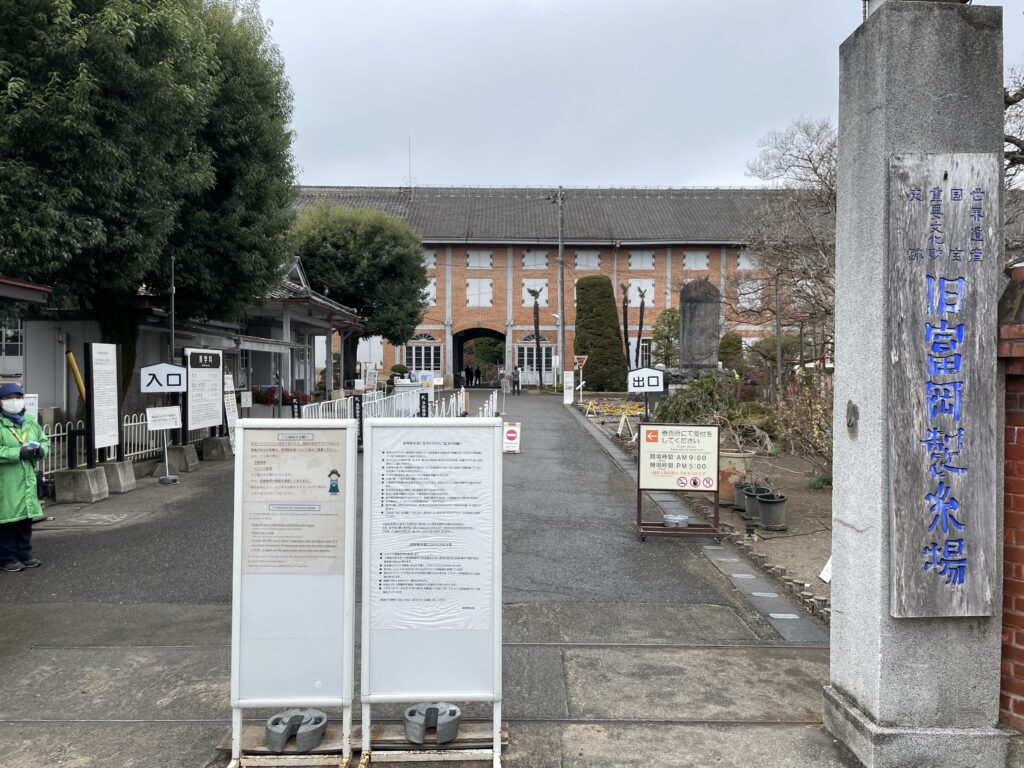
Today I’ll cover roughly how long you should plan to spend at Tomioka Silk Mill, the UNESCO World Heritage site in Tomioka City, Gunma Prefecture.
- How I Know This
- Overview of Tomioka Silk Mill
- How Long to Spend at Tomioka Silk Mill
- Recommended Tour Route at Tomioka Silk Mill
- Highlight #1: East Storehouse (Higashi Okimayo-jo)
- Highlight #2: West Storehouse (Nishi Okimayo-jo)
- Highlight #3: Iron Water Tank (Tessui-ryu)
- Highlight #4: Silk-Reeling Plant (Soshi-jo)
- Hotels Near Tomioka Silk Mill
How I Know This
- Actually visited Tomioka Silk Mill in person
- Toured each spot at the site and timed how long each one actually took
To cut straight to the conclusion: for a first-time visit with time to sightsee properly, plan for 1.5 to 2 hours on-site. Build your itinerary around that.
Let me walk through the reasoning and details below.
Overview of Tomioka Silk Mill
Tomioka Silk Mill was Japan’s first government-run model factory, established in 1872 (Meiji 5).
Built by combining European and Japanese techniques into what was then the largest silk-reeling factory in the world, this symbol of modern Japan still commands an overwhelming presence over a century and a half later, drawing visitors from all over.
| Name | Tomioka Silk Mill |
| Address | 1-1 Tomioka, Tomioka City, Gunma 370-2316 |
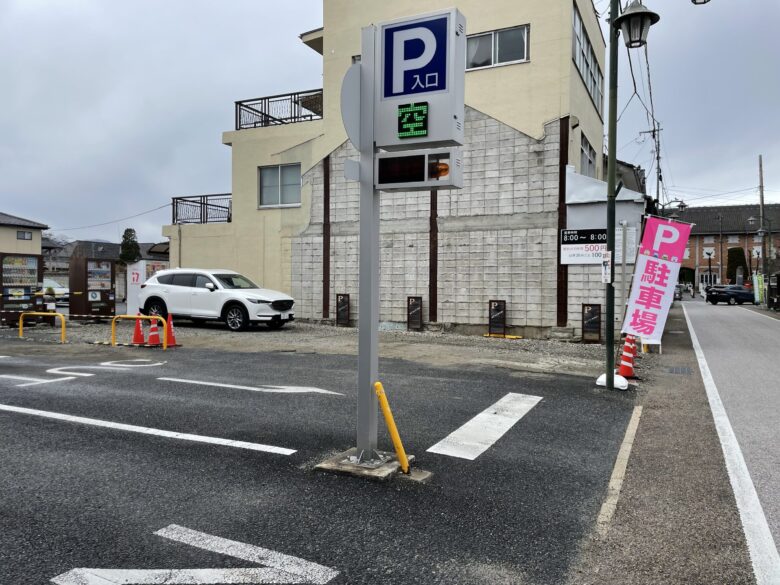
| Parking | No dedicated lot ※ Several lots available nearby |
| Official Link | Shiruku Tomioka — Tomioka City Tourism Site |
✓ Search for hotels near Tomioka Silk Mill >>
Rakuten Travel Yahoo! Travel
How Long to Spend at Tomioka Silk Mill
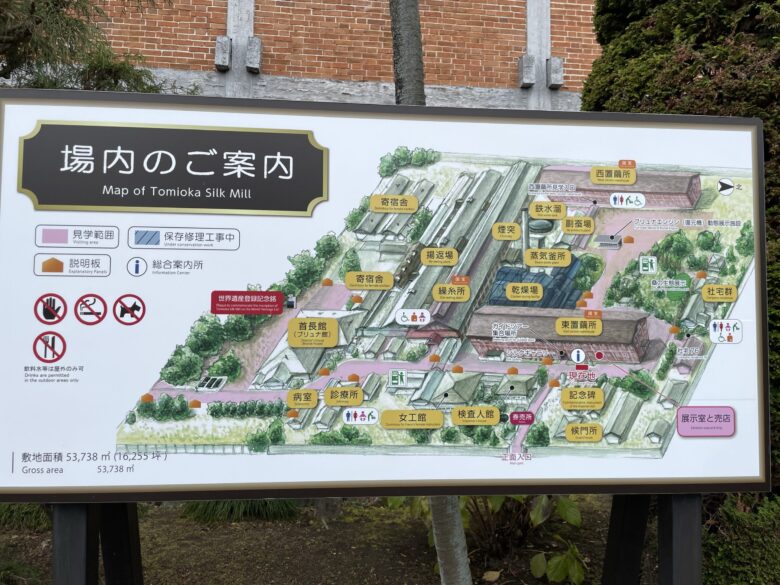
Here’s how long each part of the site actually took on a first-time visit:
| Main Spot | Highlights | Time Needed |
| East Storehouse | National Treasure workspace History of Tomioka Silk Mill | 50 min |
| Brunat Engine (replica) | Full-scale engine replica | 5 min |
| West Storehouse | Raw silk cocoon storage | 20 min |
| Iron Water Tank | One of the oldest water-storage structures in Japan | 5 min |
| Staff Housing | Housing for management staff | 10 min |
| Inspector’s House & Women Workers’ Hall | Important Cultural Property | 5 min |
| Silk-Reeling Plant | Silk reeling factory | 10 min |
| Director’s House & Dormitory | Housing for hired French staff | 10 min |
Add these up and the total time needed to tour Tomioka Silk Mill comes to 115 minutes, or roughly 2 hours.
The East Storehouse shows a video explaining the history of Tomioka Silk Mill, and watching it seated takes 50 minutes.
Coming all this way without learning the history feels like a missed opportunity, so I’d recommend watching it — but skipping it saves about 15 minutes, bringing the total down to 1 hour 20 minutes at minimum.
If you want to keep things brief, a guided tour is a good option — that takes just 40 minutes.
> Book the paid guided tour at Tomioka Silk Mill
Recommended Tour Route at Tomioka Silk Mill
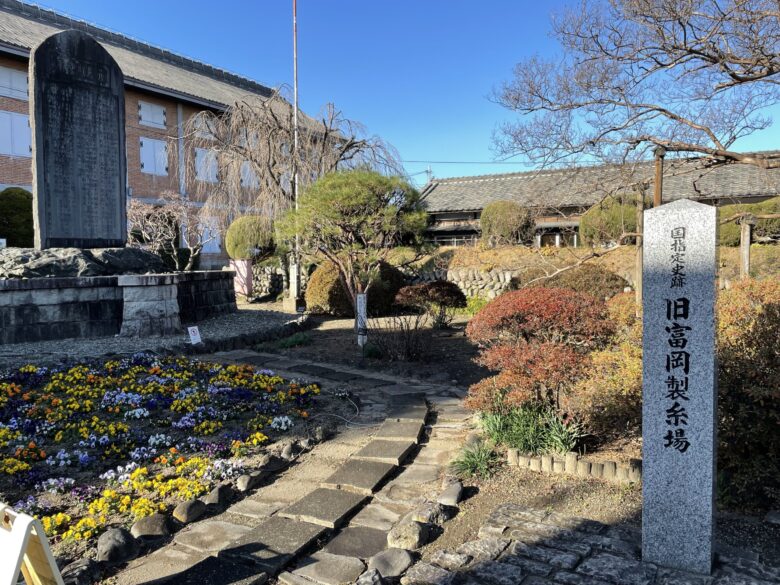
The simplest way to see everything efficiently is to just follow the designated route.
Each area has a sign marking the route, so just follow those.
- A. East Storehouse
- B. Brunat Engine (replica)
- C. West Storehouse
- D. Iron Water Tank
- E. Staff Housing
- F. Inspector’s House & Women Workers’ Hall
- G. Silk-Reeling Plant
- H. Director’s House & Dormitory
Following this route lets you tour the East Storehouse, West Storehouse, and Silk-Reeling Plant while understanding the history, with no wasted time — a useful reference when planning your order.
Next, let me walk through a few of the highlights along the way.
Highlight #1: East Storehouse (Higashi Okimayo-jo)
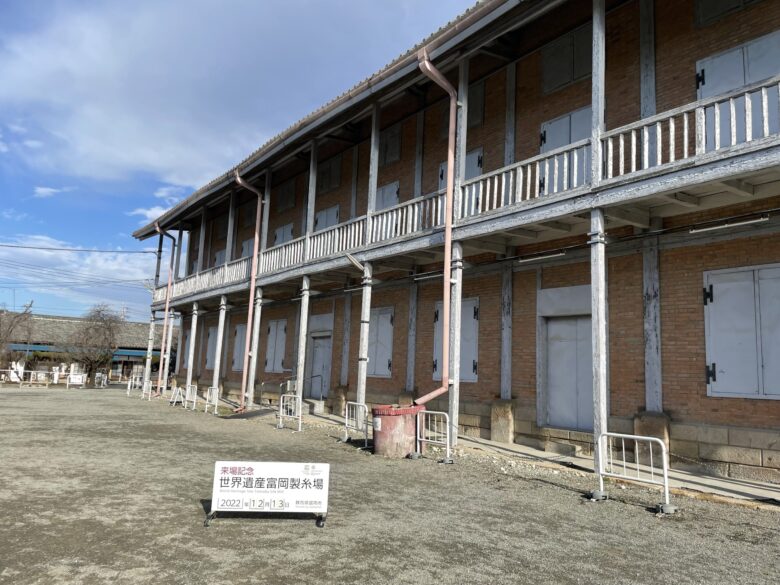
The first highlight is the brick building visible from the main gate — the East Storehouse, a National Treasure.
Built in 1872 (Meiji 5), the 1st floor was used as an office and workspace, while the 2nd floor was used to store dried raw silk cocoons.
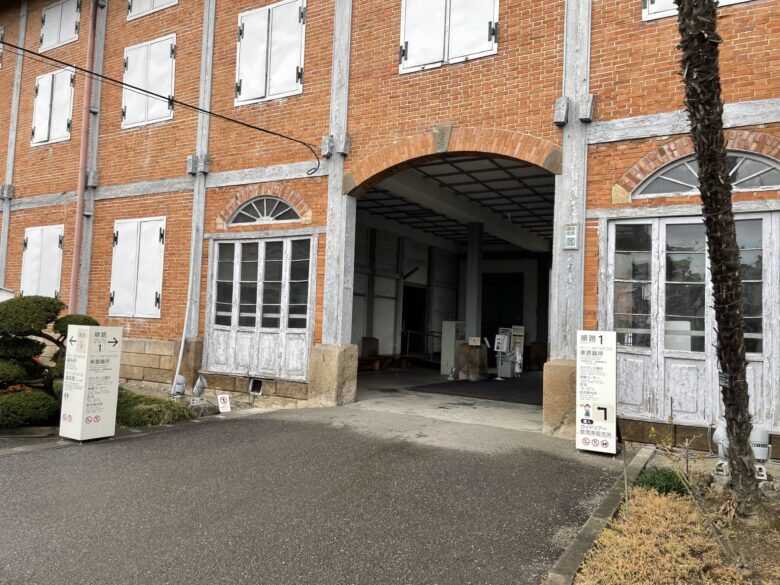
Look closely at the keystone of this archway leading to the inner courtyard, and you’ll spot the inscription “Meiji 5” (1872).
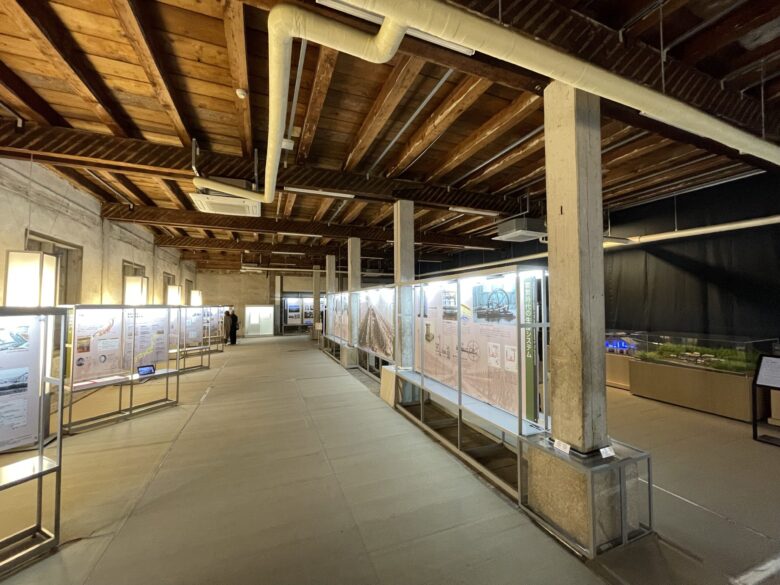
To the right of the East Storehouse, you can view exhibits on the value, history, and various artifacts of Tomioka Silk Mill.
A film explaining the history of Tomioka Silk Mill plays in a space toward the back right — if your legs need a break, it’s a good spot to sit down and watch.
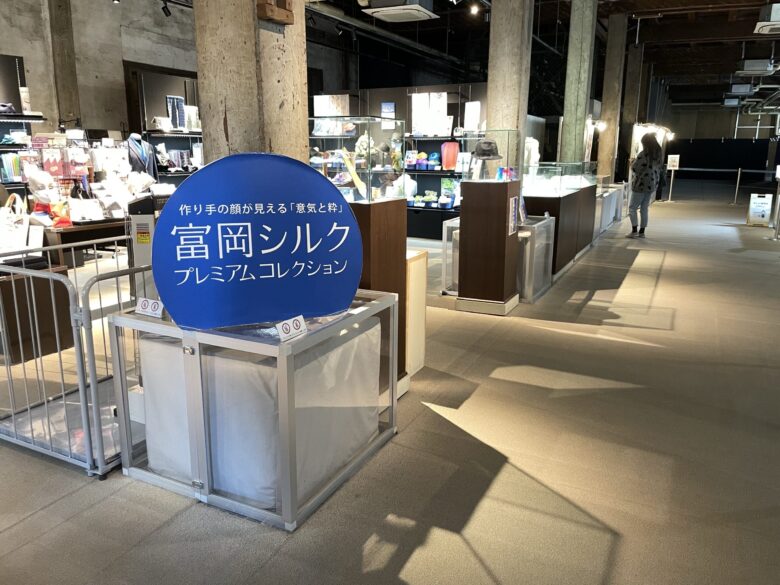
To the left of the East Storehouse is a shop selling silk goods made at Tomioka Silk Mill.
Ties, scarves, handkerchiefs, and more make for a nice souvenir or something to keep for yourself.
Highlight #2: West Storehouse (Nishi Okimayo-jo)
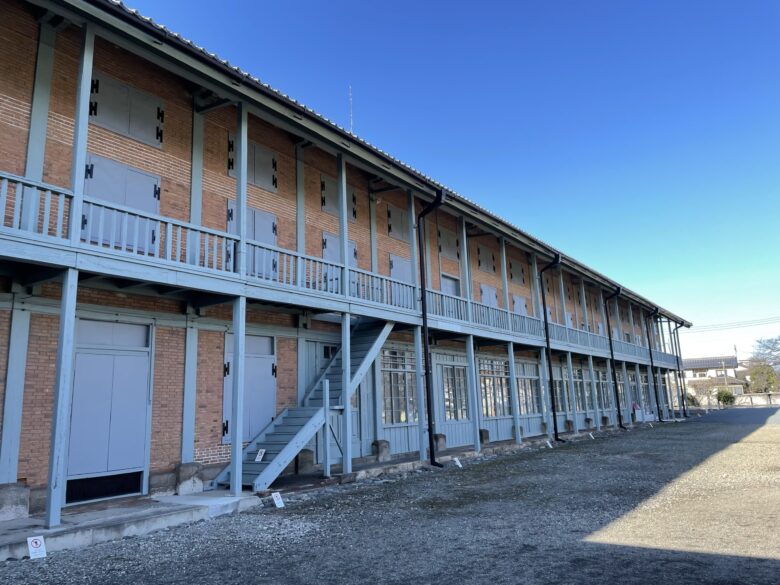
Pass through the archway facing the East Storehouse and continue further in, and this building — the West Storehouse — comes into view.
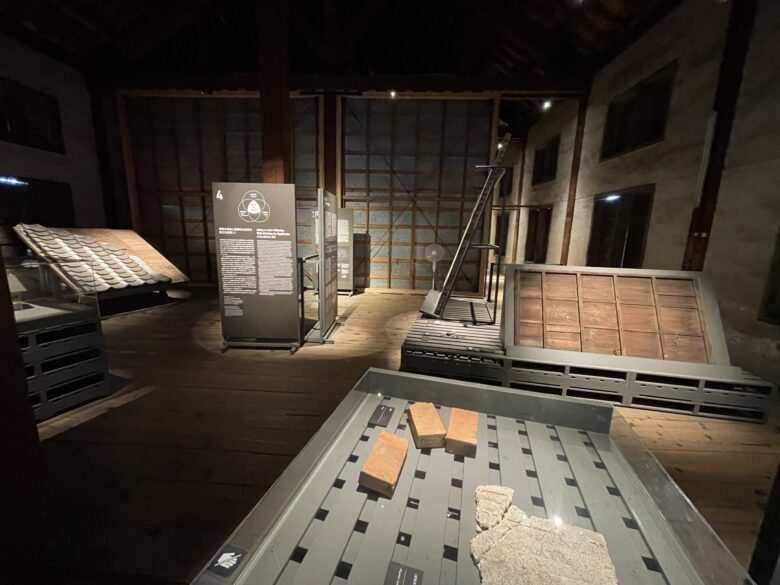
The 1st floor, in the factory’s early days, was reportedly used to store coal for fueling the steam boiler and to sort and store cocoons.
It now houses a permanent exhibit of historical materials, covering the lives and work of the female employees as well as the silk-making process.
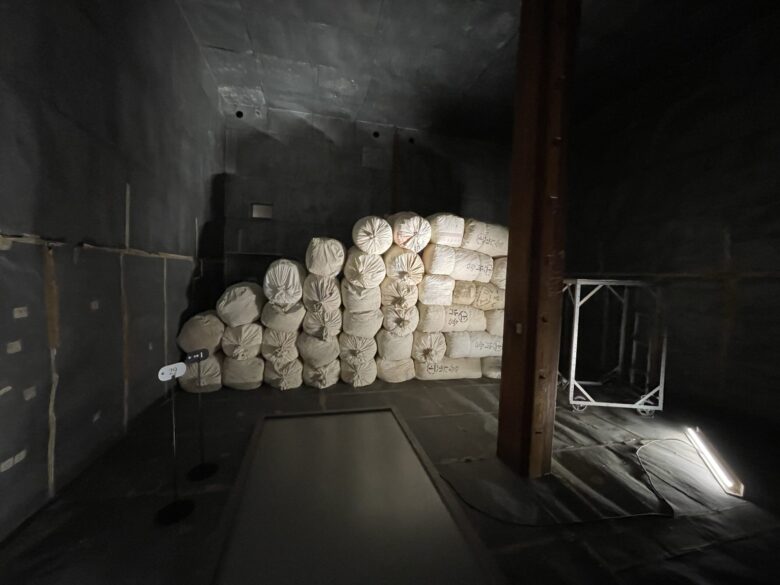
The 2nd floor was used to store raw silk cocoons, and you can see that storage setup on display — along with exhibits explaining details uncovered during the recent preservation and restoration work.
Highlight #3: Iron Water Tank (Tessui-ryu)
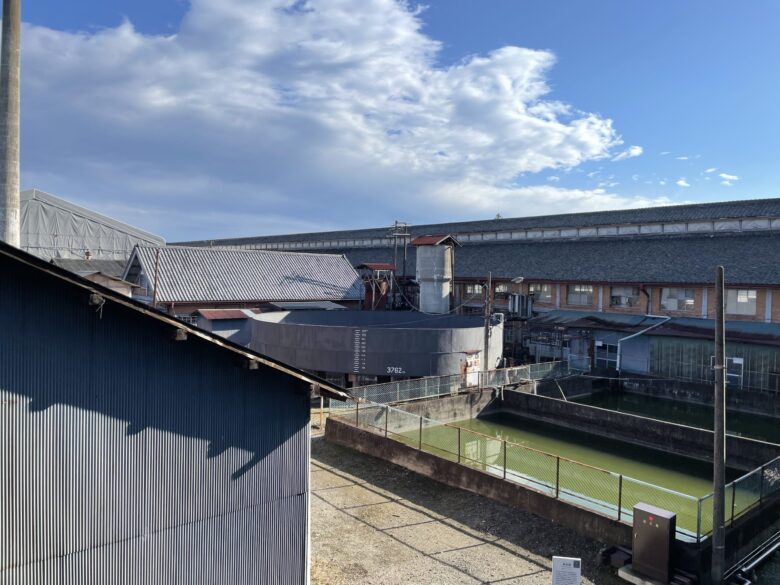
Since silk-reeling factories use huge amounts of water, a storage system was essential — hence this round iron water tank.
It’s simply massive in scale, and reportedly the oldest surviving iron structure in Japan.
It’s best viewed looking down from the 2nd floor of the West Storehouse.
Highlight #4: Silk-Reeling Plant (Soshi-jo)
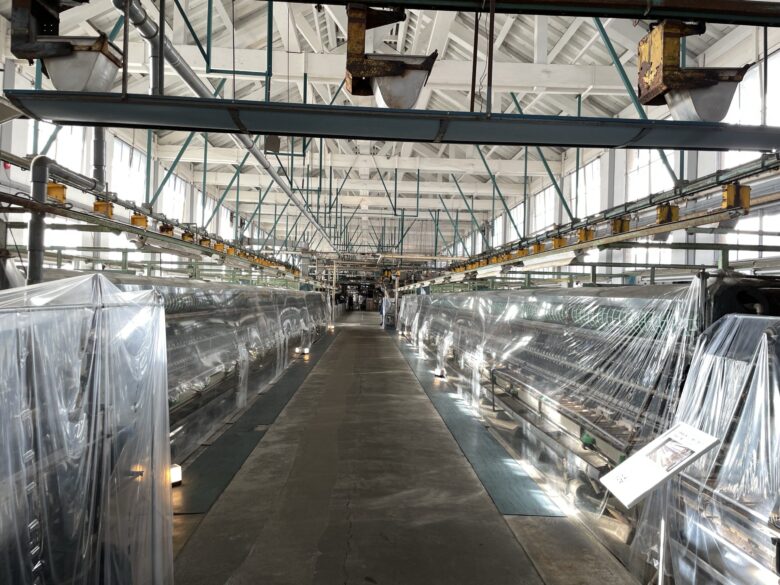
This is where raw silk thread was reeled from the cocoons. At the time of opening, 300 reeling basins were installed, making it reportedly the largest silk-reeling factory in the world.
Look up at the ceiling and you’ll see a “truss structure,” a construction method not previously used in Japan, designed to eliminate the need for center pillars and maximize workspace.
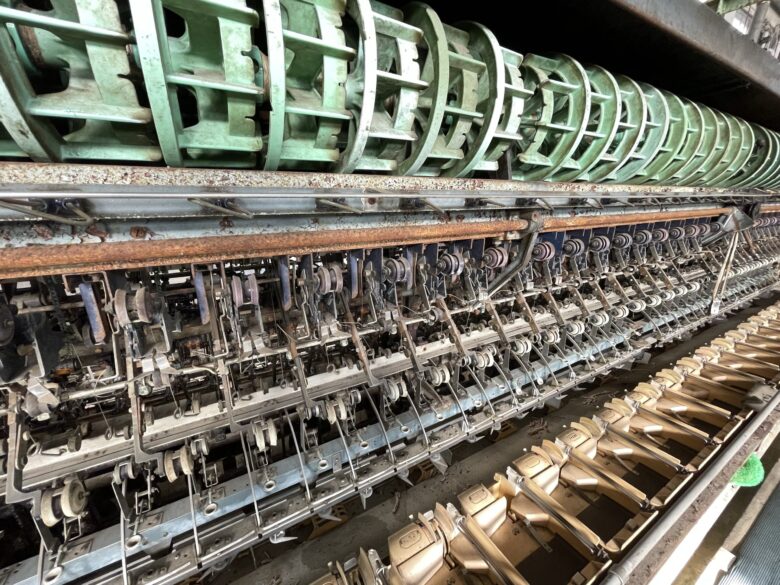
This machinery reportedly stayed in continuous use for 115 years.
Brushing up on some background knowledge through a book before visiting can make your tour of Tomioka Silk Mill even more rewarding.
Hotels Near Tomioka Silk Mill
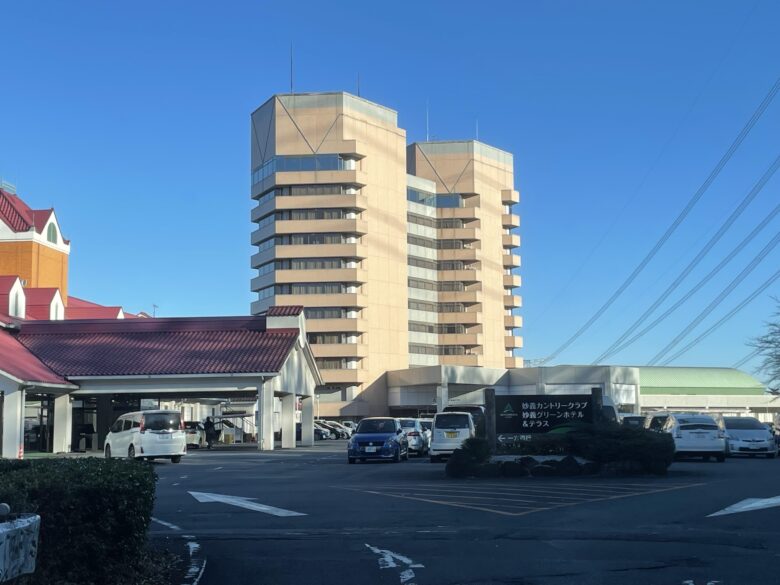
There aren’t many hotels right next to Tomioka Silk Mill, but if you’re combining your trip with golf, Myogi Green Hotel & Terrace is a great choice — about a 20-minute drive from Tomioka Silk Mill.
The view from the restaurant was fantastic!
Another option is staying at a business hotel near Takasaki Station and heading to Tomioka Silk Mill after checking in the next day.
Since reopening on March 21, 2025, with a newly added men’s electric bath and a fully renovated sauna featuring automatic löyly, Hotel Dormy Inn Takasaki — Haruna no Yu has become a popular choice.

If you plan around 1.5 to 2 hours for Tomioka Silk Mill, you’ll have plenty of time to enjoy it without feeling rushed. Hope this helps with your trip planning!
—
About the author

Joe
I love hotels, hot springs, and saunas across the whole country!!
I’ve made it to 40 prefectures so far.
Around 100 hotel stays and 50+ saunas visited, and the count keeps climbing.
My hobbies are travel, golf, snowboarding, saunas, and the gym.
Getting good information is essential to living a rich life.
I’ll keep sharing useful info for wherever your next trip takes you! For work inquiries (venue PR, advertising, hotel article requests), please reach out through this blog’s contact form.
Happy to work flexibly with your needs.
Certified Sauna & Spa Health Advisor

コメント