

Hi! I’m Joe.
This time I’d like to introduce the giant Hindu holy site near Kuala Lumpur, Malaysia, “Batu Caves.”
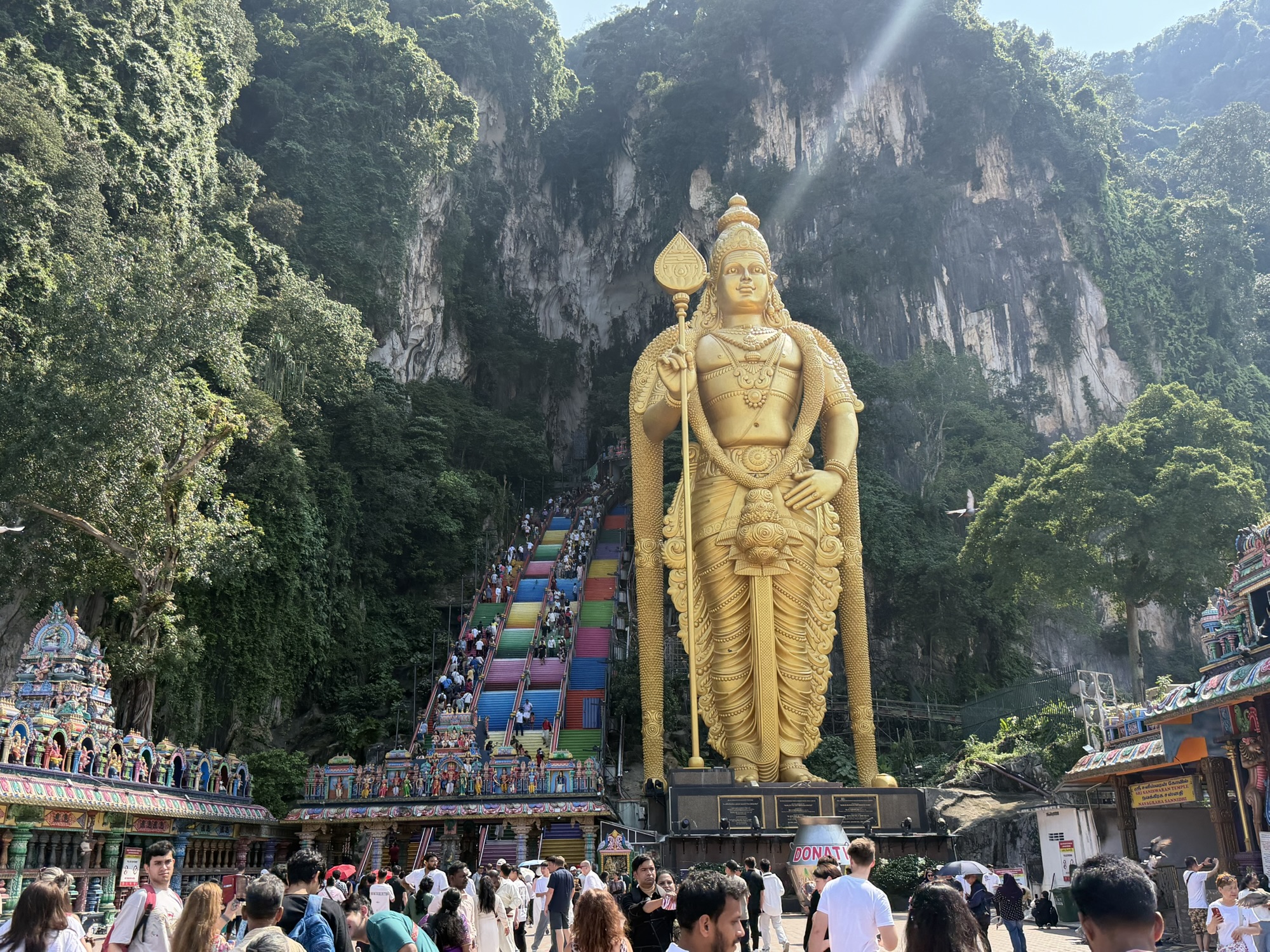
The “Batu Caves,” known for their 272 brightly colored steps and a giant golden statue, are a tourist attraction you could almost say is a must-visit when sightseeing in Malaysia.
In this article, I explain in detail the highlights and time needed for the Batu Caves, of course, as well as how to get there, things to watch out for on site, and even nearby sightseeing spots.
“I’m curious what kind of place the Batu Caves are”
“I want to know how long sightseeing takes after climbing the steps”
“I want to check what to prepare before going, such as clothing and monkey precautions”
This article is ideal for people like that, so please read to the end.
・I actually went to the Batu Caves
・I actually climbed the 272 steps and investigated the highlights and the real time it took
What are the Batu Caves? Explaining Malaysia’s foremost holy site
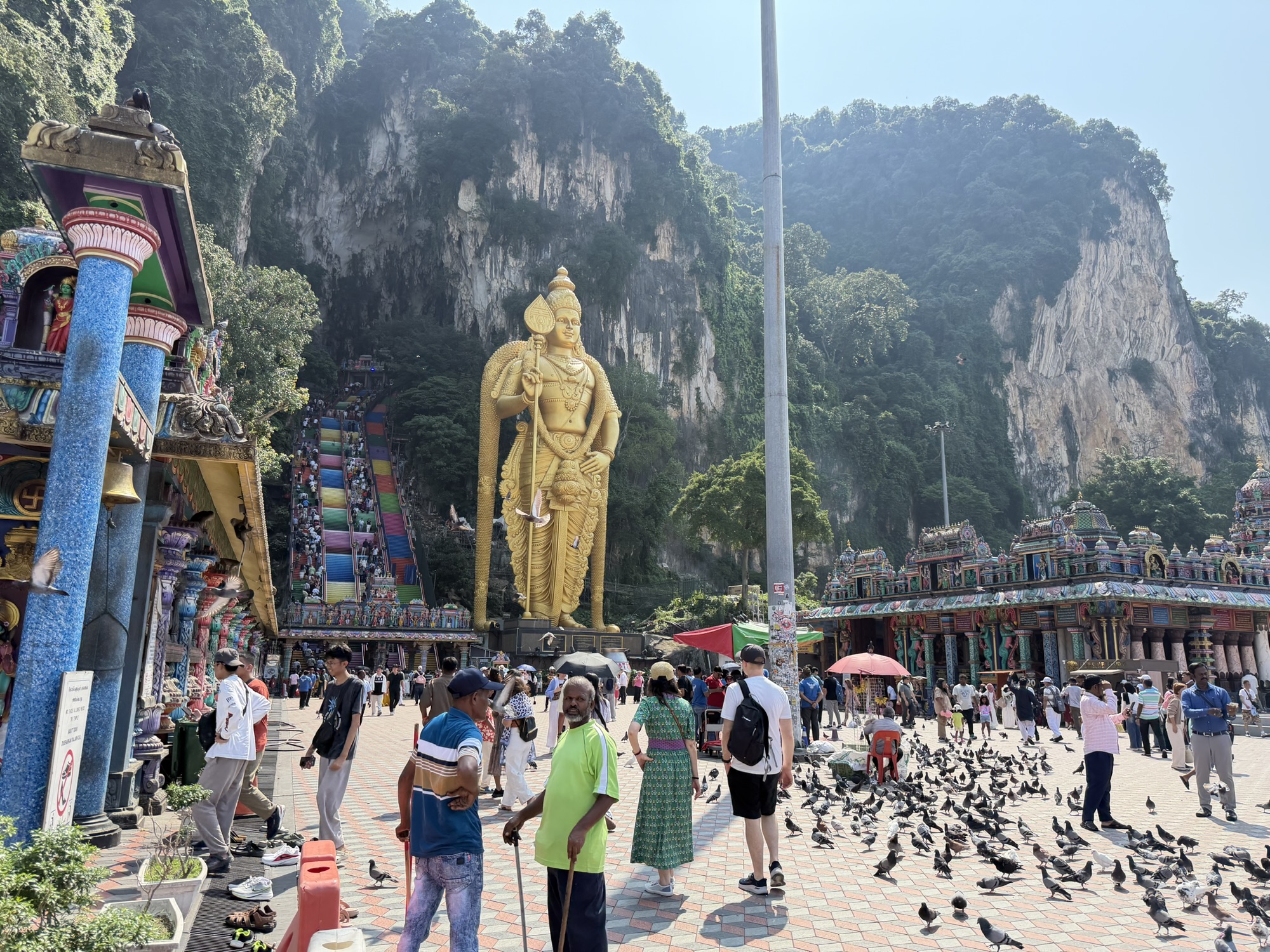
The Batu Caves, located in northern Kuala Lumpur, are one of Malaysia’s largest Hindu holy sites.
Today it’s a spot bustling with tourists, but behind it is a story of long history and faith.
History and origins of the Batu Caves
This cave, believe it or not, has existed as a limestone cave for about 400 million years, and was once used as a shelter by indigenous peoples.
Then in 1890, it was developed as a temple enshrining “Murugan,” the Hindu god of war, by K. Thamboosamy Pillay, a Hindu leader in Malaysia.
1891: The first Murugan statue was erected
1920: The originally wooden steps were rebuilt in concrete, 272 steps, as worshippers increased
2018: After more than 100 years of history, major renovation was carried out and they were reborn as today’s “colorful steps”
| Name | Batu Caves |
| Address | Gombak, 68100 Batu Caves, Selangor, Malaysia |
| Hours | 8:00〜19:00 |
| Closed | Open year-round |
| Access | <By Grab (ride-hailing app)> About 30 minutes from central Kuala Lumpur (around KLCC/KL Sentral). The fare is about 20 to 30 ringgit (varies with congestion). <By train (KTM Komuter)> From KL Sentral Station, board a train bound for “Batu Caves” and get off at the terminus, Batu Caves Station. 5-minute walk. About 40 minutes. |
| Parking | Available (paid) *Most tourists use Grab or the train. |
| Map |
Find hotels near the Batu Caves >>
Expedia
Estimated time needed to sightsee the Batu Caves
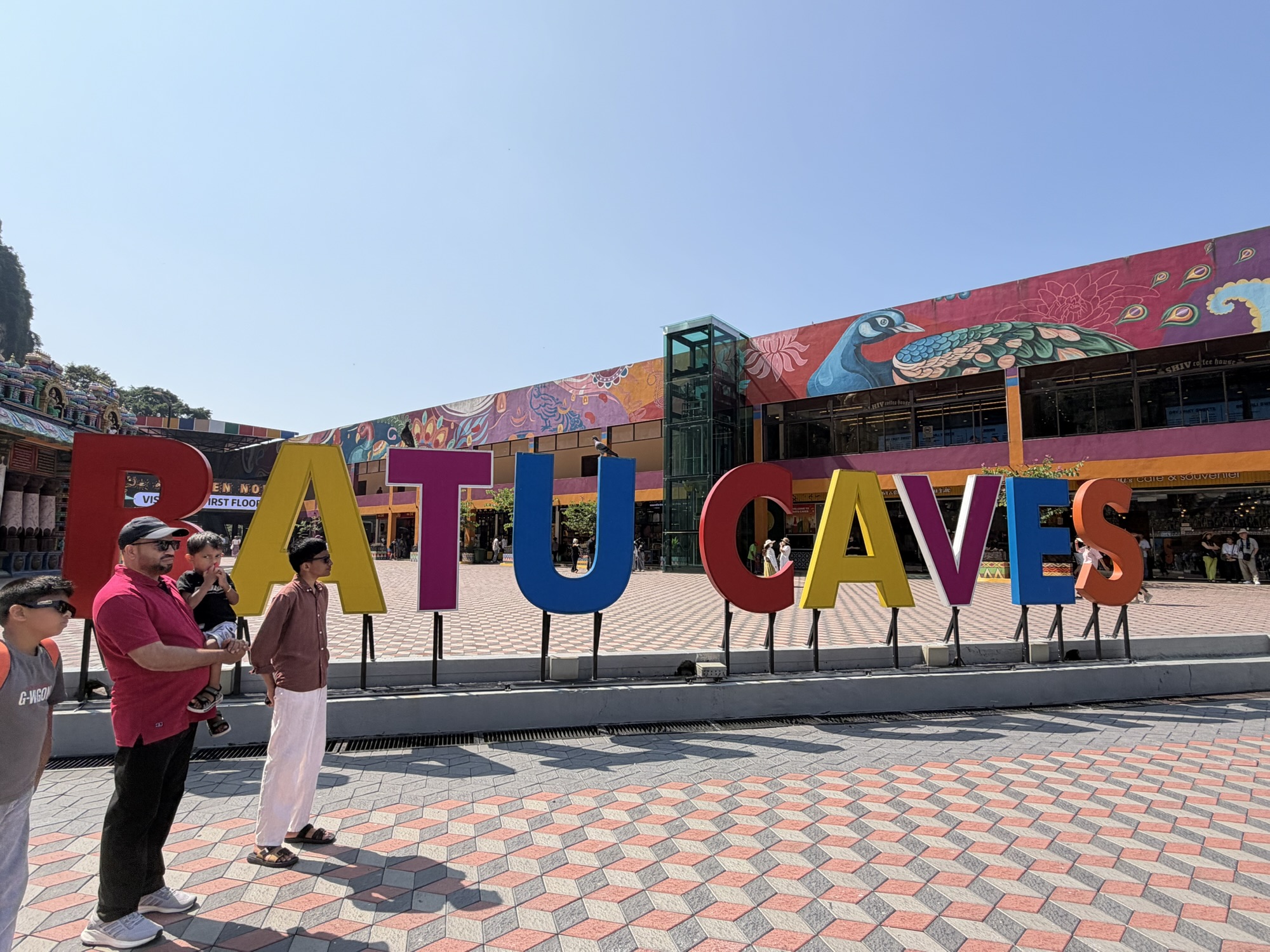
The Batu Caves are inside a giant limestone cave about 100 m high, so they boast a very dynamic scale.
With a space this vast and 272 steps, what you’ll wonder about is the time needed to sightsee.
Here are the real times it took me to see each spot when I actually visited the Batu Caves.
| Main sightseeing spot | Point | Time needed |
| Plaza and Murugan statue | ・Photographing the world-class golden statue and watching the flock of pigeons | 10 minutes |
| Colorful steps (272 steps) | ・Climbing while enjoying taking photos (beware of monkeys interfering) | 15 minutes |
| Main cave (Cathedral Cave) | ・Light streaming in from the high ceiling and viewing the Hindu temple | 15 minutes |
| Temple at the deepest part of the cave | ・An open-ceilinged sanctuary beyond further steps | 10 minutes |
| Descending the steps | ・Carefully descending the steep steps and taking final photos at the foot | 15 minutes |
The main highlights of the Batu Caves are the “Murugan statue,” the “colorful steps,” the “main cave (Cathedral Cave),” and the “temple at the deepest part,” and including going up and down the steps, sightseeing takes about 70 minutes.
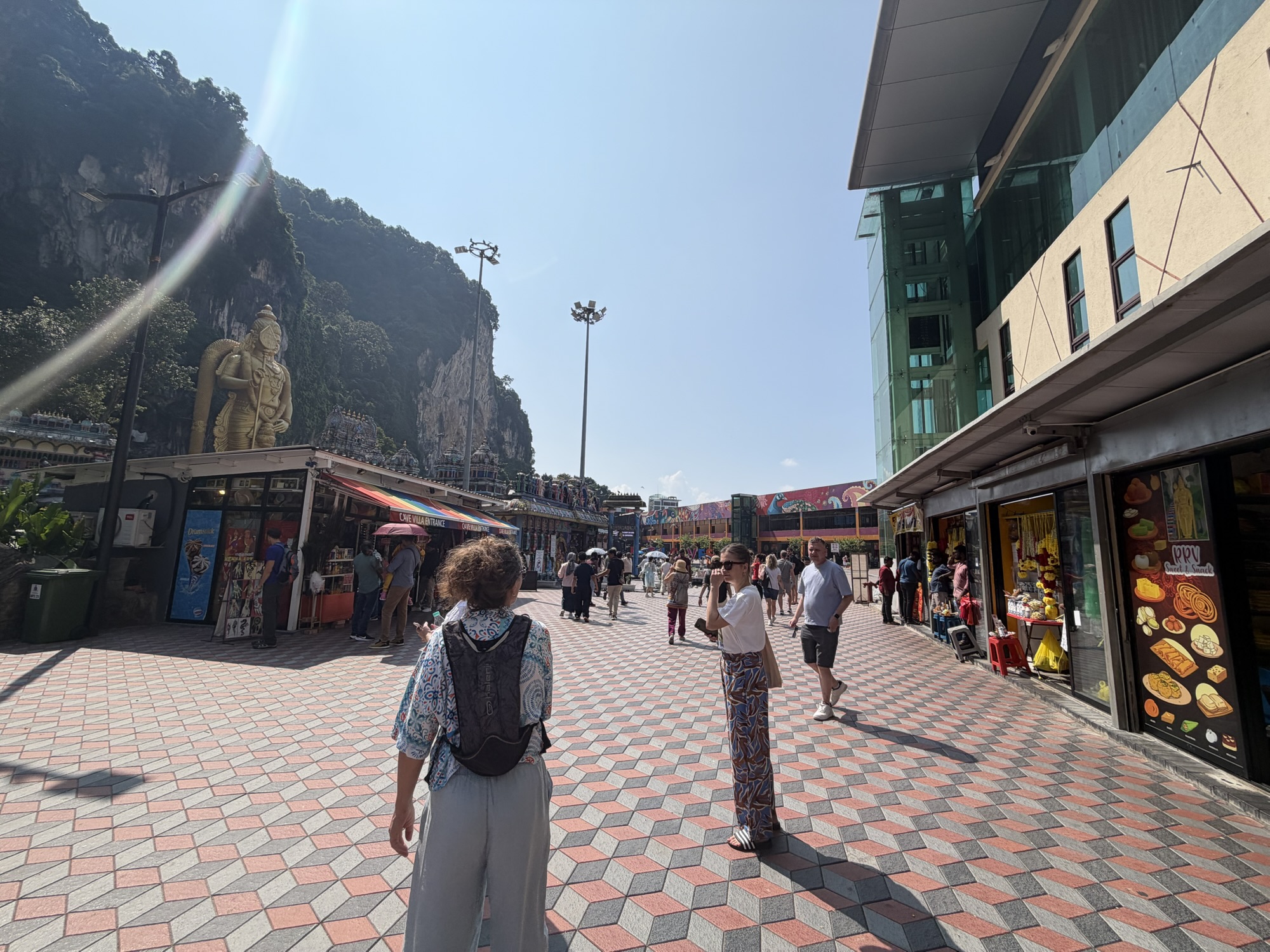
In the area shown in the photo there are several shops where you can enjoy cold drinks, light snacks, and meals.
- If you stop for a drink at a cafe or kiosk: +15 to 20 minutes
- If you eat lunch on site: +30 to 45 minutes
Adding these together, if you allow 1.5 to just over 2 hours overall, you can enjoy sightseeing very leisurely.
Especially after going up and down the 272 steps you’ll be more worn out than you’d expect, so I recommend taking a break in the kiosk area without pushing yourself!!
[Real experience] Recommended Batu Caves sightseeing model course
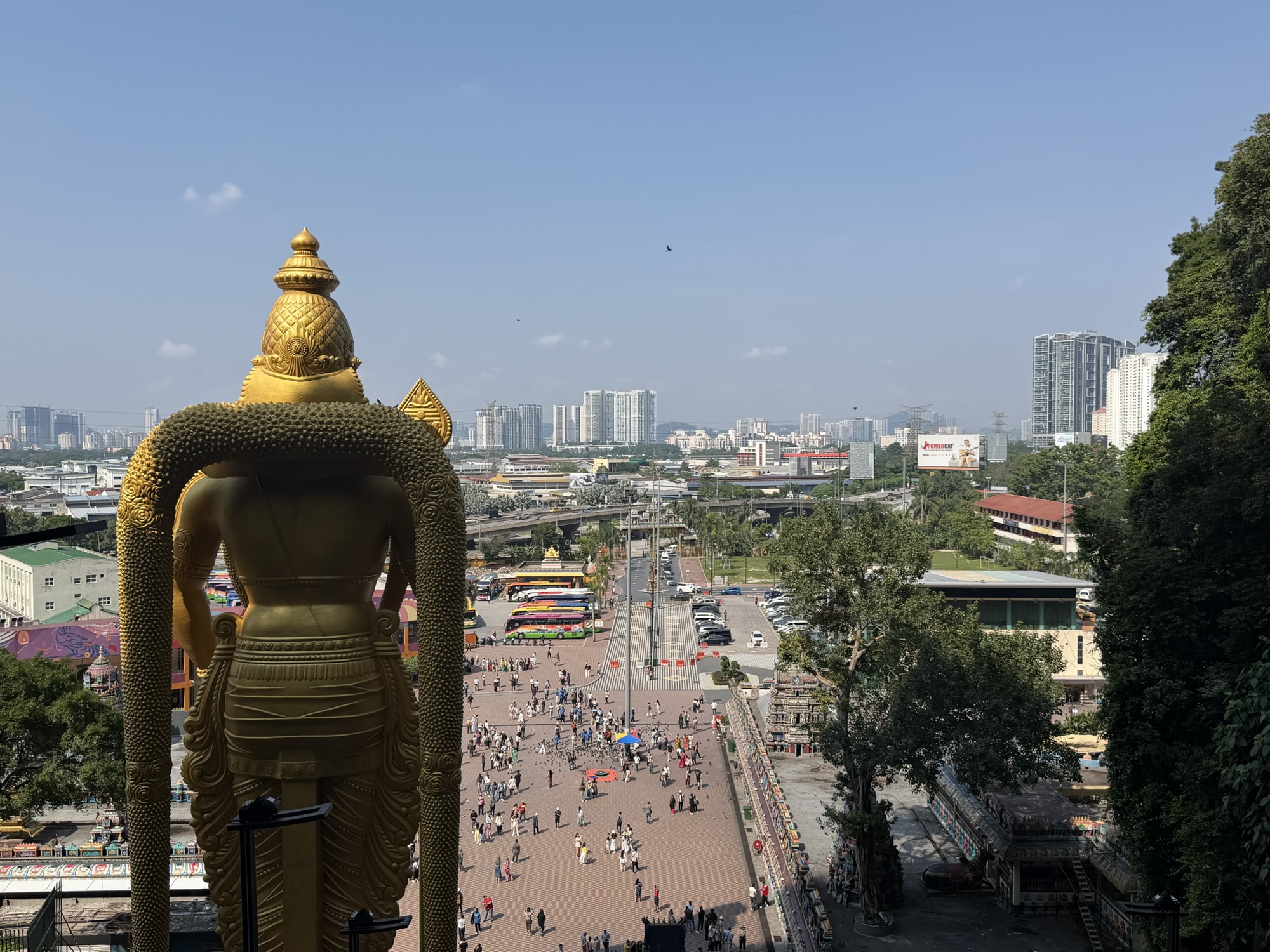
Here is a recommended model course for sightseeing the Batu Caves efficiently, based on real experience.
The trick to sightseeing the Batu Caves efficiently is to tackle the main steps and the cave all at once in the morning while your energy is preserved!
If there’s a crowd for photos on the steps, don’t linger; push ahead first and take photos on the way down for smoother sightseeing.
Also, revealing clothing is prohibited inside the cave. There’s a dress check at entry, so if you’re wearing shorts and the like, rent a sarong (wraparound cloth) at the entrance before starting your visit.
1. Take a commemorative photo in front of the Murugan statue
First, see the giant golden statue towering at the entrance.
↓
2. Climb the 272 rainbow steps
Head straight for the top. Monkeys are often on the handrails, so be careful.
↓
3. Tour the main cave
Stroll inside the vast limestone cave beyond the top of the steps.
↓
4. Head to the temple at the deepest part
Visit the temple in the open-ceilinged area further back in the cave.
↓
5. Descend the steps and head home
After going down the steps, hydrate and rest at the kiosks at the foot.
Going around this route lets you sightsee with no wasted time, so please use it as a reference.
Next, let me introduce a few of the highlights.
Must-see highlight 1: The giant golden Murugan statue and the 272 rainbow steps
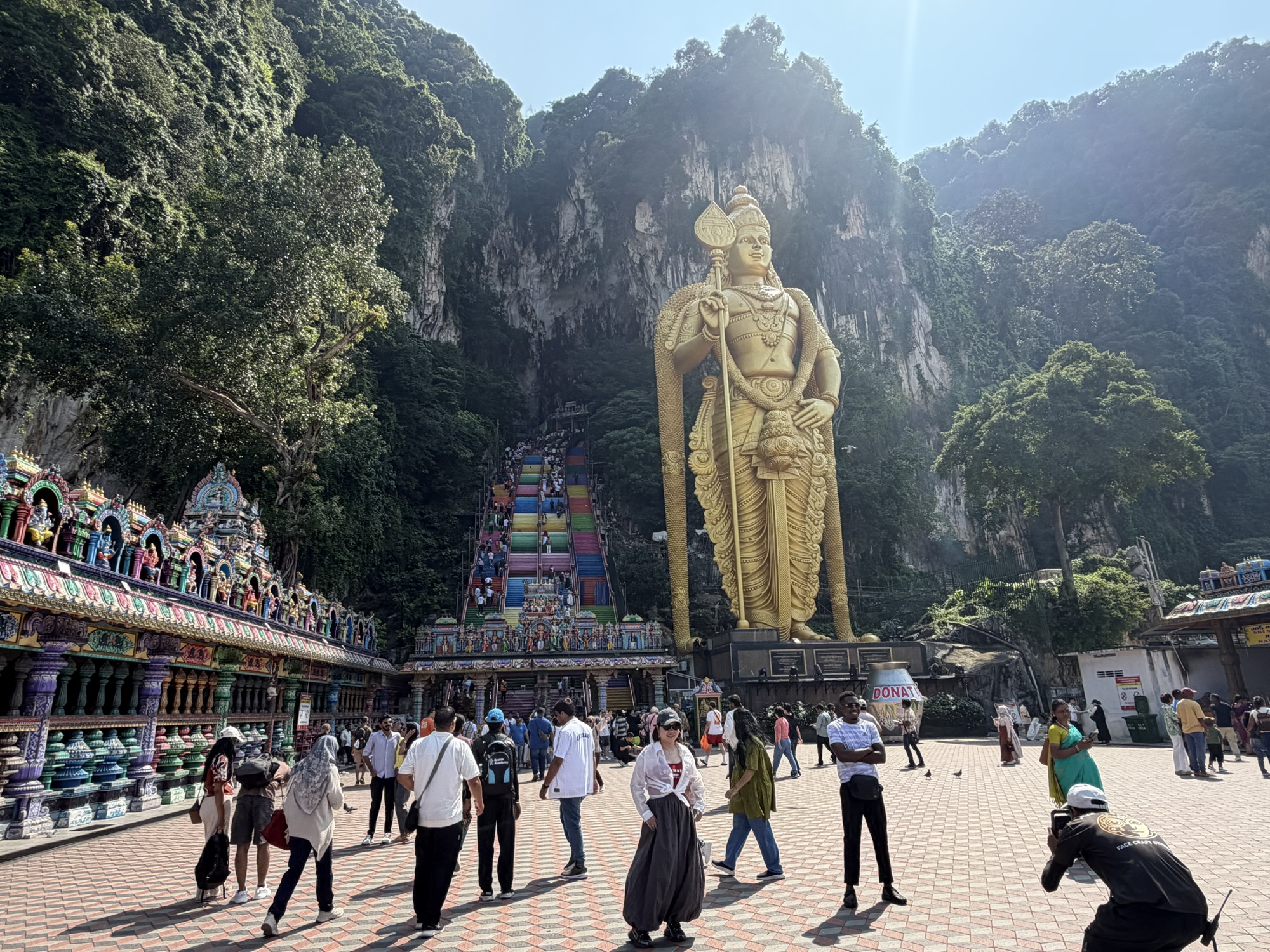
The first spot you see on arriving at the Batu Caves is the giant golden “Murugan statue” in the photo and the “272 rainbow steps” continuing behind it.
The Murugan statue stands about 43 m tall, and its gorgeous decoration symbolizing the dignity of a Hindu holy site is a sight to behold!!
The steps were repainted in vivid colors in the 2018 renovation.
The sight of the 272 steep steps continuing is truly a photogenic landscape representing Malaysia.
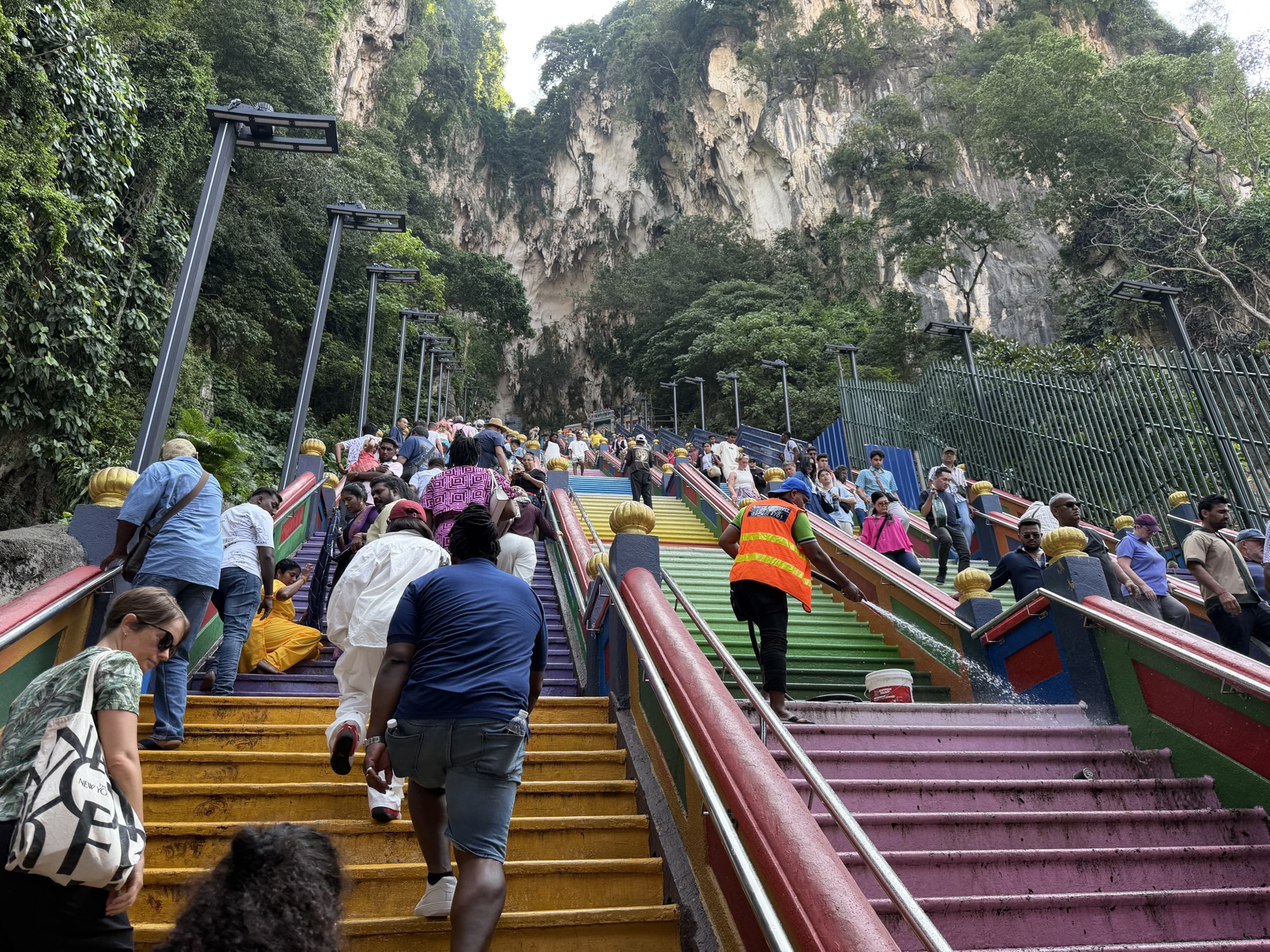
These 272 steps are quite steep, more than you’d imagine.
Each step is also narrow, and in places the angle is such that you feel a bit uneasy unless you hold the handrail.
With the large crowds and the tropical heat sapping your strength, climbing all the way in one go is a rather hard workout, so the trick is to not push yourself: hold the handrail partway, take short breaks while looking at the view, and climb at your own pace.
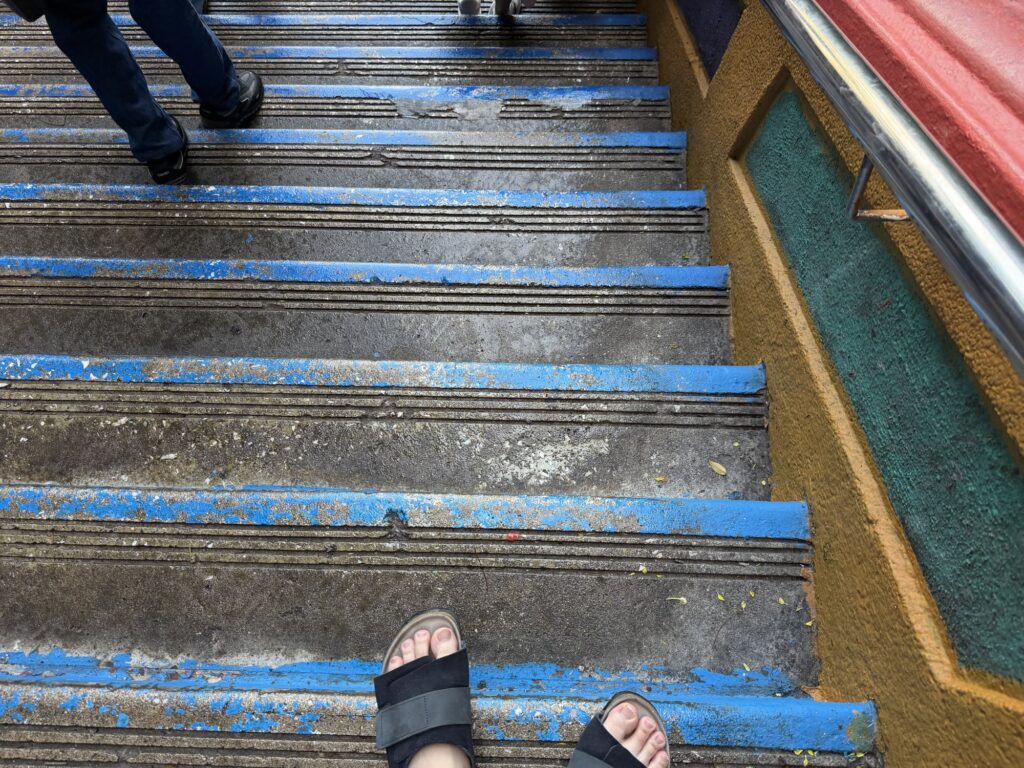
The “steps back down” after finishing your Batu Caves visit require even more care than going up.
You can see the steepness and narrow width of each step even more clearly.
Looking down, the angle makes your legs freeze, and especially if the steps are wet after Malaysia’s typical squall, they’re very slippery, so be careful.
Must-see highlight 2: Inside the mysterious main cave (Cathedral Cave)
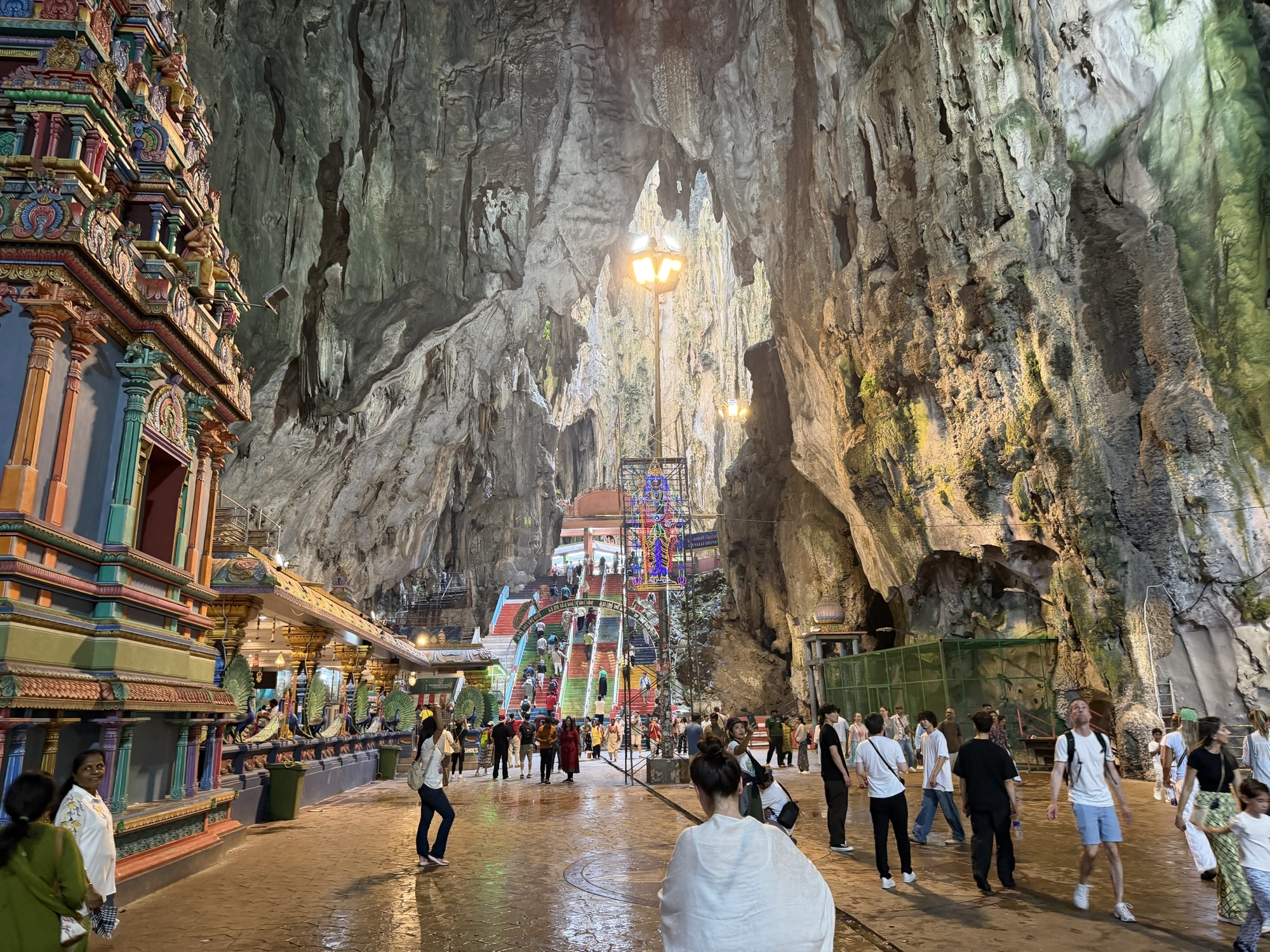
Beyond the top of the steep 272 steps spreads a vast, mysterious space.
Inside the giant limestone cave, about 100 m high, stands a brightly colored Hindu temple.
A single beam of light shining through a gap in the cave ceiling and lighting the rock face has a solemn atmosphere truly worthy of a holy site.
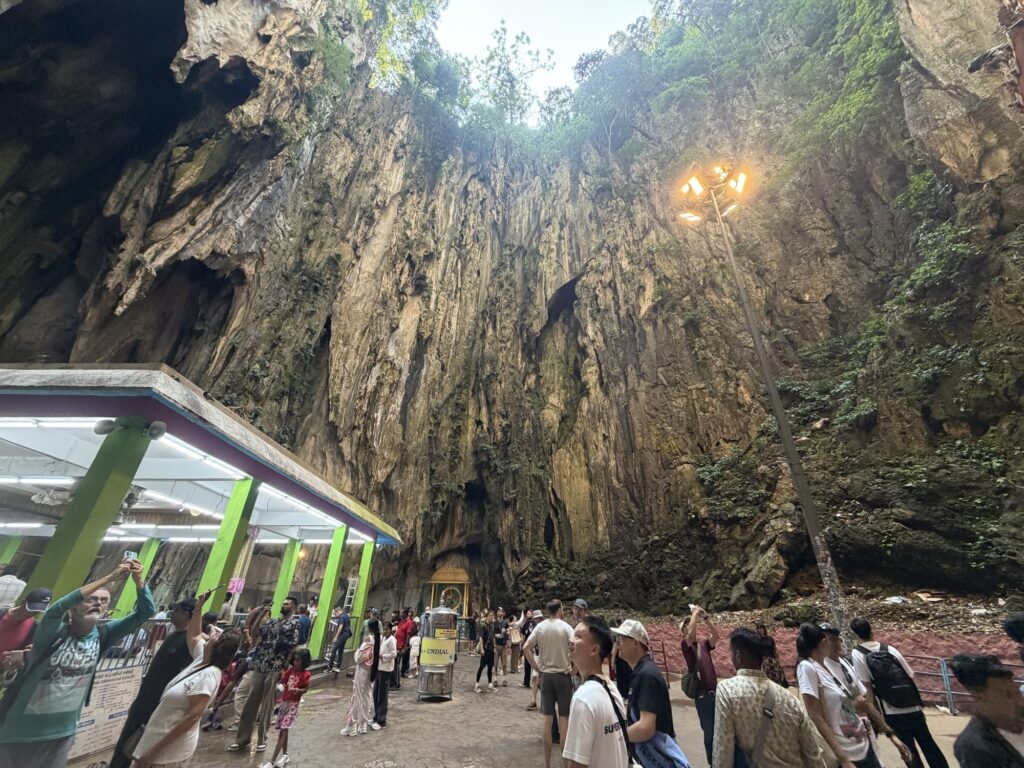
Climbing the stairs that continue further in from the main cave, you reach a sanctuary with a wide-open ceiling.
This is the deepest part of the Batu Caves, and the space surrounded by sheer rock walls is a special place where the power of nature and faith resonate.
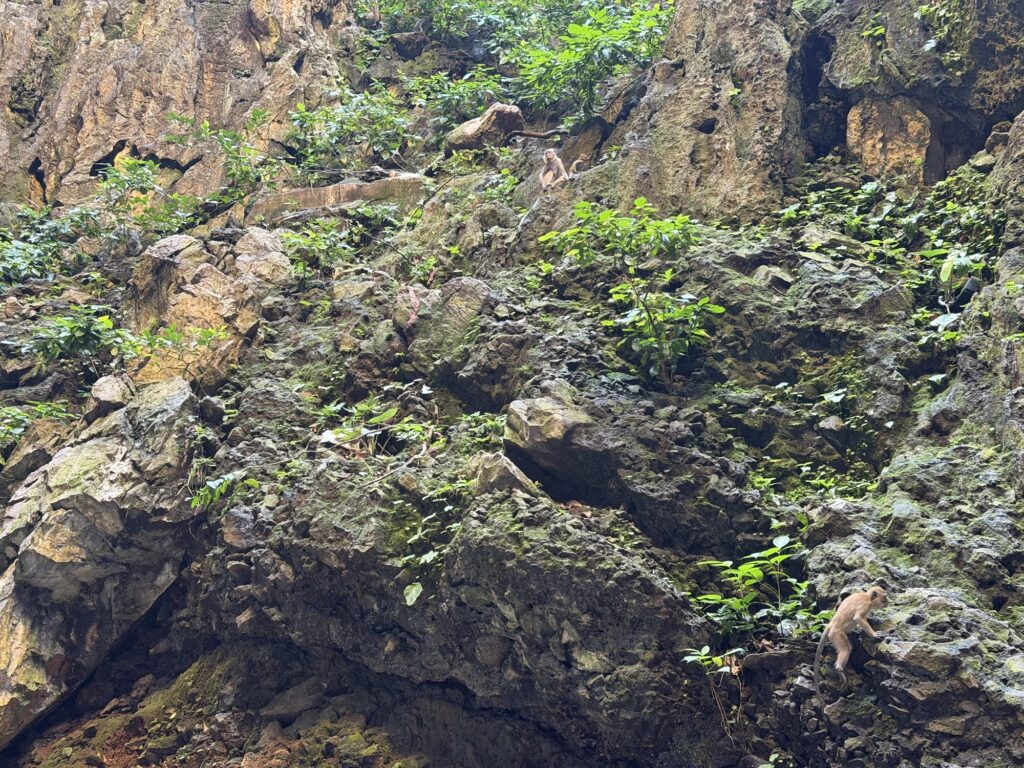
Looking up at the nearby rocks, you can see many wild monkeys living there.
They appear everywhere, around the steps and on the rocky areas. They look cute, and there were no aggressive monkeys that attacked people, but they approach food at tremendous speed, so be careful.
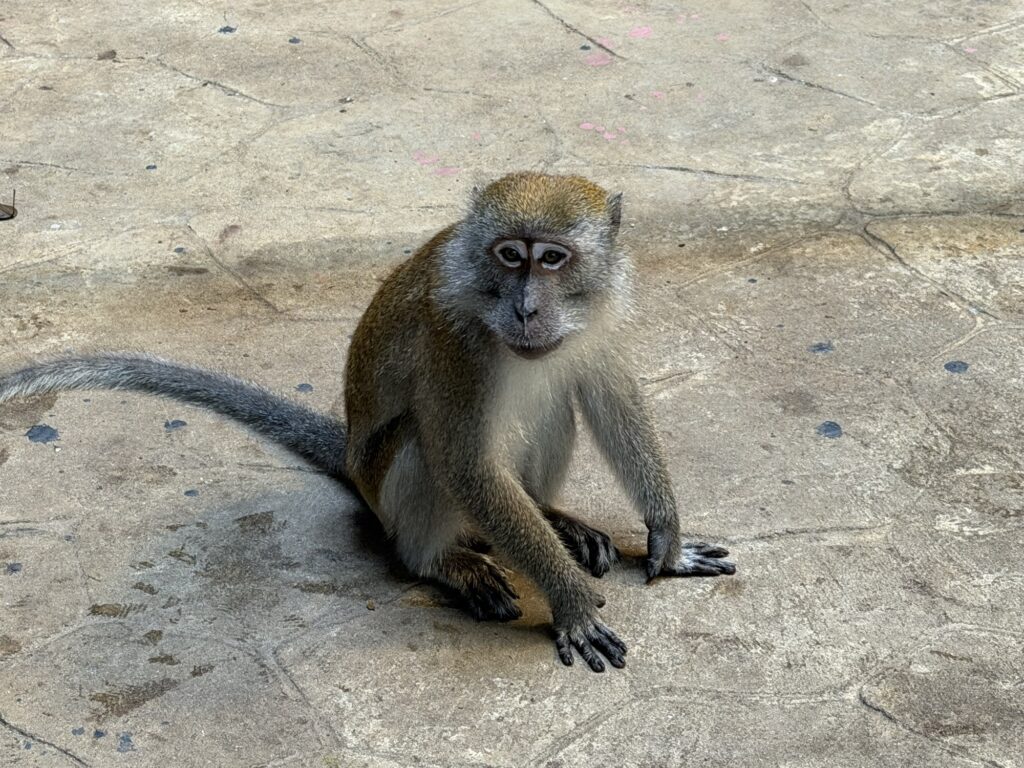
Here’s a monkey that came right up next to the tourists!
When you’re focused on shooting, you tend to be defenseless, so pay attention to your surroundings too.
How to get to the Batu Caves: Train (KTM) vs. Grab
There are two main ways to get to the Batu Caves: “Grab (ride-hailing app)” and “train (KTM Komuter).”
Based on my experience actually using both, I compare the pros and cons of each.
Going by train (KTM Komuter)
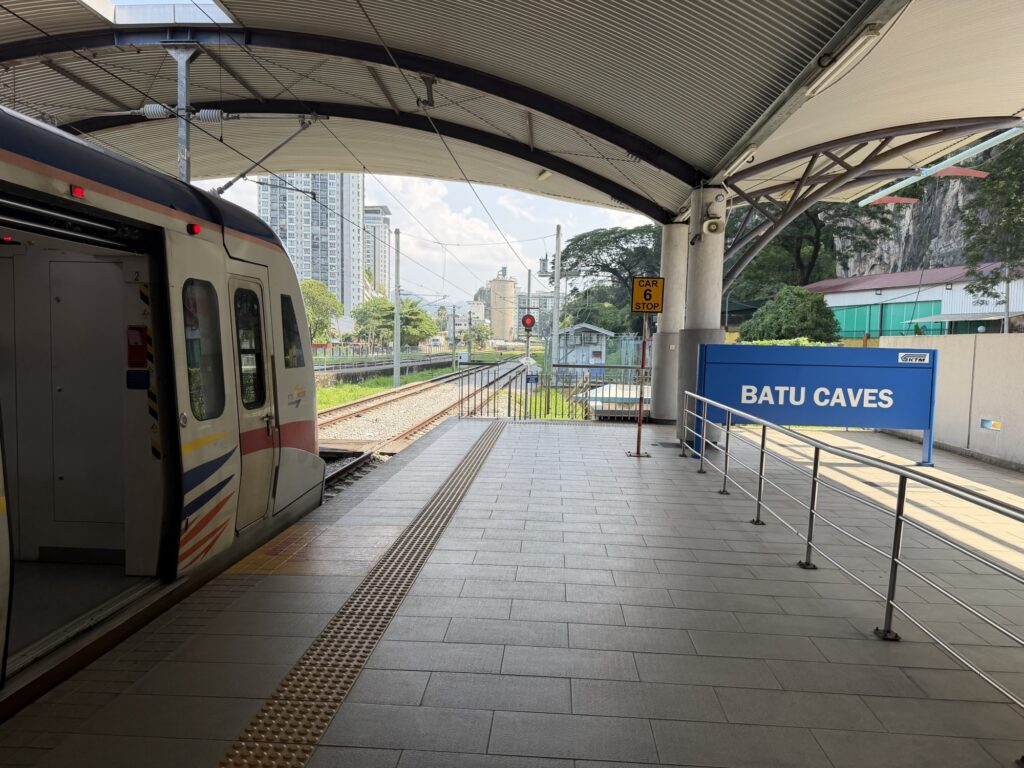
Ride from KL Sentral Station to the terminus of the “Batu Caves” line.
Joe went by train from KL Sentral Station, and got there without getting lost at all, for just 2.7 ringgit, a bargain!!
- Fare: 2.7 ringgit
- Time: About 40 minutes.
- Pros: No worry about traffic jams, and the Batu Caves are a 5-minute walk from the station, so there’s no getting lost.
- Cons: Only one train per hour, so if you also take the train back you need to act according to the timetable.
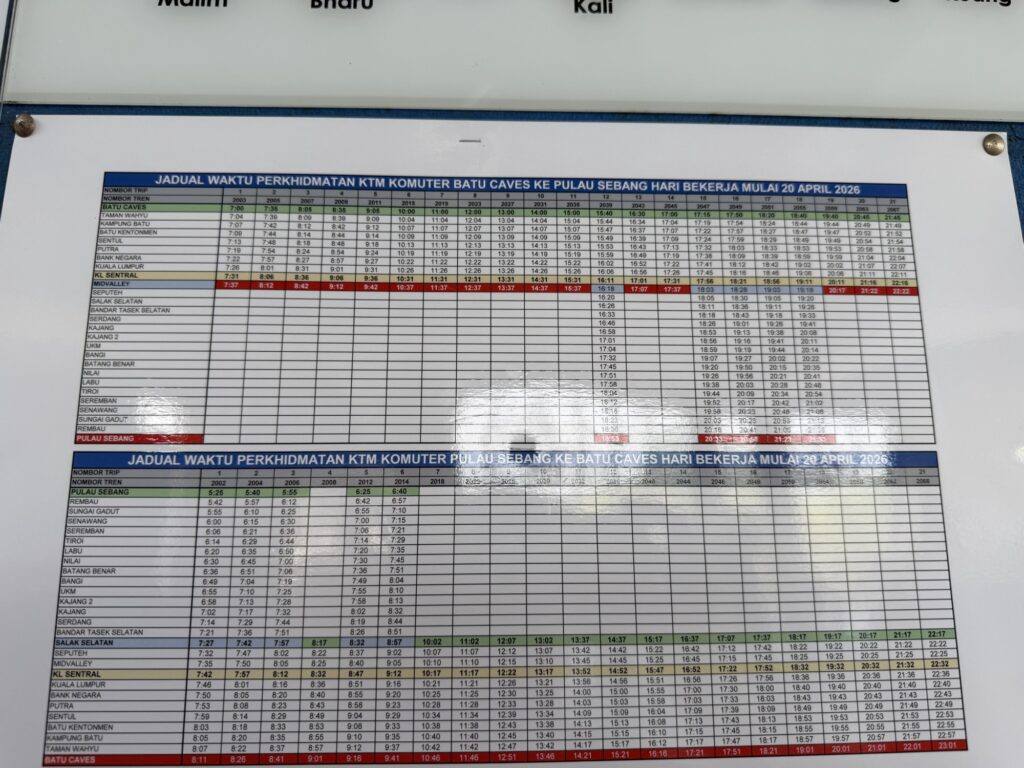
There’s a timetable on the right side of the ticket gates at Batu Caves Station, so check your return train.
If you miss one, you’ll wait nearly an hour for the next train.
If you arrive at the station on the way back and the next train is more than 30 minutes away, don’t wait unnecessarily; calling a Grab ride-hailing car makes better use of your time!
Going by Grab (ride-hailing app)
You specify your destination directly from within Kuala Lumpur and head there.
- Fare: About 20 to 30 ringgit one way (depending on congestion).
- Time: About 30 minutes.
- Pros: Door-to-door from your hotel, and you can leave without worrying about time, so it’s very comfortable, and for group travel splitting the fare is great value.
- Cons: During morning and evening rush hours you get caught in Kuala Lumpur’s notoriously heavy traffic, and it may take longer than expected.
Conclusion: Which is recommended?
- For value-focused solo travelers, the “train,” cheap and easy to navigate, is recommended.
- For efficiency-focused group travel, “Grab,” overwhelmingly easy, is best.
Especially since it gets hot in the daytime, if you want to save your energy, it’s also a smart choice to use Grab on the way there and match your return to the train timetable!


コメント