

Hi there! It’s me (@chiropiyo0331).
- The basics about Da Nang
- What makes Da Nang so appealing, from firsthand experience
- Recommended ways to spend your time there
- 3 UNESCO World Heritage Sites you absolutely must visit
- Recommended sightseeing spots in Da Nang
What Is Da Nang?
Vietnam is well known as a popular destination among Japanese travelers.
It’s a country packed with highlights: a distinctly Southeast Asian atmosphere, cheap and delicious local food, buildings that carry traces of the French colonial era, and numerous UNESCO World Heritage Sites.
The capital, Hanoi, and Ho Chi Minh City — the country’s largest and one of the biggest cities in Asia — are both major, well-known tourist areas.
And in Vietnam, the destination that has been rapidly rising in popularity in recent years as a “third” tourist hub is Da Nang.
During the French colonial era (in the latter half of the 1800s) it was known by the name Tourane, and it has been one of Vietnam’s major port towns since it began developing around that time.
In recent years, Da Nang has flourished as a beach resort, becoming a popular resort area not only for Asian visitors but also for tourists from Europe and the Americas.
Where Is Da Nang Located?
Even though it’s a popular travel destination, plenty of people still can’t quite picture where it is. So where exactly is Da Nang?
It sits roughly in the middle of Vietnam, a country with a long, narrow, north-to-south shape.

From Japan, flying out of Narita or Haneda takes about 6 hours there and about 5 hours back — a bit easier to reach than Hawaii (7 hours there, 9 hours back), ha!
From Ho Chi Minh City it’s about a 1 hour 20 minute flight, and from Hanoi it’s also about a 1 hour 20 minute flight.
From Ho Chi Minh City or Hanoi you can fly with the major carrier Vietnam Airlines, of course, as well as LCCs like Vietjet Air and Jetstar Pacific.
From Da Nang Airport to the city center is only about 3km.
A taxi will get you there in 15–20 minutes.
The city itself isn’t overly large, and it’s very safe, which makes it easy to sightsee.
Getting from Da Nang Airport to a beachfront resort hotel is also convenient — within 30–40 minutes by taxi.
It’s no exaggeration to call it the easiest-to-reach overseas beach resort from Japan!
It’s a city where you can sightsee comfortably even on your first trip to Vietnam.
Da Nang’s Weather
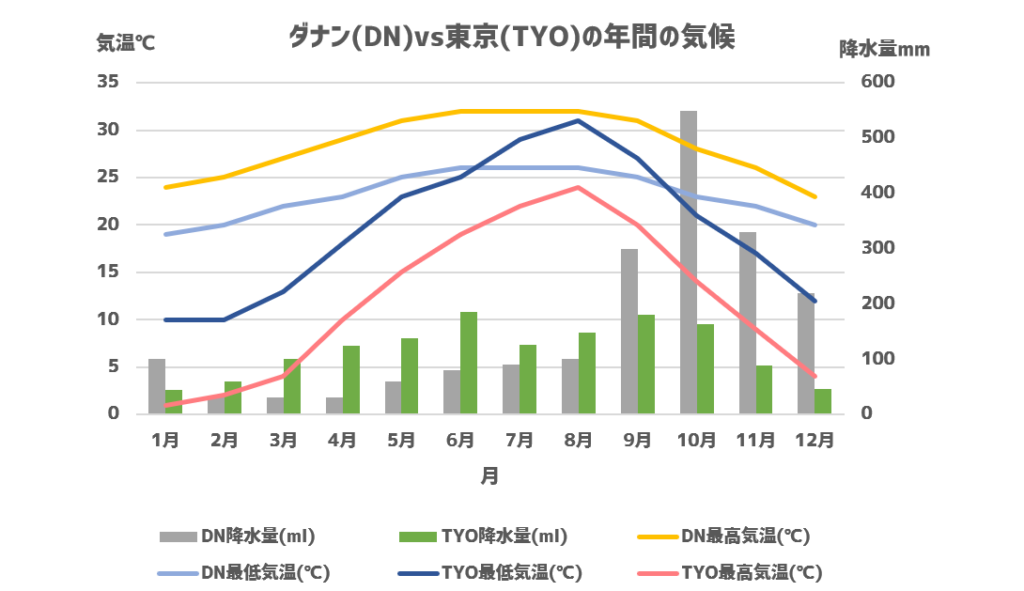
Da Nang’s climate is broadly split into two seasons throughout the year: a rainy season and a dry season.
In Da Nang, the rainy season runs from September to February, and the dry season from March to August. The same applies to Hoi An.
*Note that the capital Hanoi in the north and Ho Chi Minh City in the south are geographically far apart, so their rainy and dry seasons fall at different times.
The average annual temperature is around 26°C, and the sun is strong year-round.
Dry Season Climate (March–August)
Within the dry season, June through August is especially hot, with average temperatures topping 30°C, and some days exceeding 40°C.
Even in the dry season, humidity can still be high on some days.
Walking around under the sun for long stretches is tough, so a hat, sunglasses, and sunscreen are must-have items.
For sightseeing during this scorching stretch, I’d recommend carrying a change of T-shirt too.
That said, both Da Nang and Hoi An are coastal towns, so a pleasant sea breeze blows through now and then, and you can cool off comfortably in the shade.
Personally, I’d recommend visiting Da Nang during the dry season.
Rainy Season Climate (September–February)
Since it’s the rainy season, humidity is unusually high, averaging over 85%.
September and October still see temperatures above 30°C on many days, so it’s still a perfectly good time for the beach.
That said, October is also typhoon season, so you’ll want to be careful.
I actually visited during typhoon season myself, and was lucky enough to catch a gap between two typhoons. Luck matters too (lol).
From November to February, temperatures drop to around 20–25°C, so it may not be ideal for swimming.
The sea gets choppier and murkier, and some beaches ban swimming altogether. That said, it’s a popular time for surfers.
Even during this season, sightseeing around Da Nang and Hoi An isn’t a problem. Even though humidity is high, it doesn’t rain every single day.
There are plenty of clear days too, so you can enjoy comfortable weather for visiting the World Heritage Sites. Dressing like you would for a Japanese spring or autumn should be fine.
Why We Recommend Da Nang
Here’s why we recommend Da Nang.
1. A World-Class Beach Resort

A coastline stretching 30km (70km if you include Hoi An to the south!) is lined with beaches where beautiful waves roll in.
It was once even chosen by America’s famous Forbes magazine as one of the “Top 6 Most Alluring Beaches in the World”.
Da Nang Beach was the only one in Asia to make that Top 6 list.
The others on the list were Bahia in Brazil, Bondi in Australia, Costello in Spain, Las Terrenas in the Dominican Republic, and Wailea in Hawaii.
The beach sits close to the city center, and My Khe Beach, which draws the most visitors, is especially popular.
There are also plenty of private beaches reserved for hotel guests, where you can soak up an elegant, sea-to-yourself kind of experience.
2. Access to 3 UNESCO World Heritage Sites
Vietnam is home to 8 UNESCO World Heritage Sites.
Remarkably, 3 of them are accessible from Da Nang.
Whether you join a tour or take a leisurely taxi ride, it’s an extremely well-connected area for sightseeing.
Let’s go through the 3 World Heritage Sites one by one.
World Heritage Site: “Hoi An Ancient Town”
Best time to visit: especially in the evening
Admission: free (it’s a town)
Opening hours: no restriction (it’s a town)
Suggested visit length: you could easily spend a full day here. If you’re just going for the evening, 2–3 hours is enough to look around.
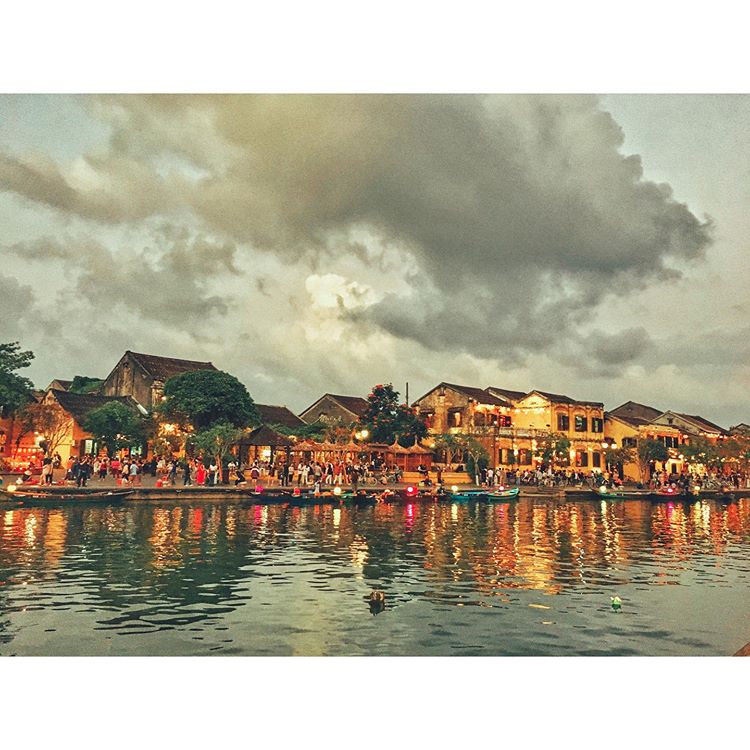
The entire town is a UNESCO World Heritage Site — a bucket-list destination any travel lover should visit at least once in their life.
Development began in the 16th century, and more than 400 wooden buildings built around the 19th century still stand today.
It flourished as a hub of maritime trade and is known for the many foreign settlers who moved there, which gives it its unique atmosphere.
It’s wonderful during the day, but the nighttime atmosphere is what really steals the show!
Colorful lanterns light up the ancient town at night, creating a dreamy, atmospheric streetscape.
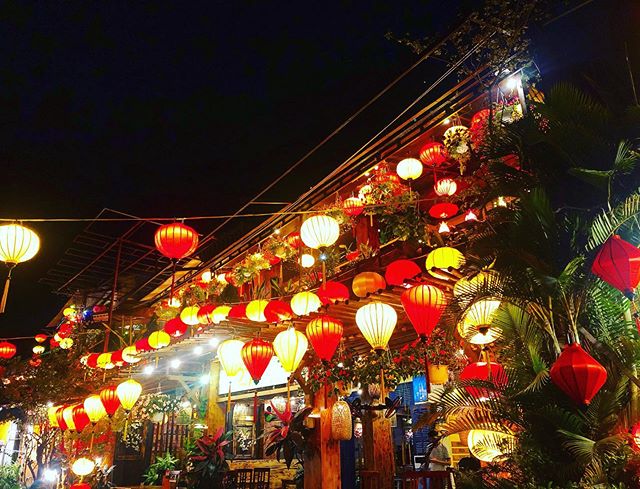
You can also take a small boat along the river to see Hoi An’s night view. Unlike walking on land, it lets you enjoy the lanterns’ colors reflected on the water from a completely different angle.
I couldn’t help snapping photo after photo of the lanterns myself! It’s a sightseeing spot you absolutely have to visit.
It’s a World Heritage Site, but people still live there day-to-day, so you’ll have no trouble finding somewhere to eat!
World Heritage Site: “My Son Sanctuary”
Admission: 100,000 VND per person
Opening hours: 6:00–17:00
Suggested visit length: about 2 hours
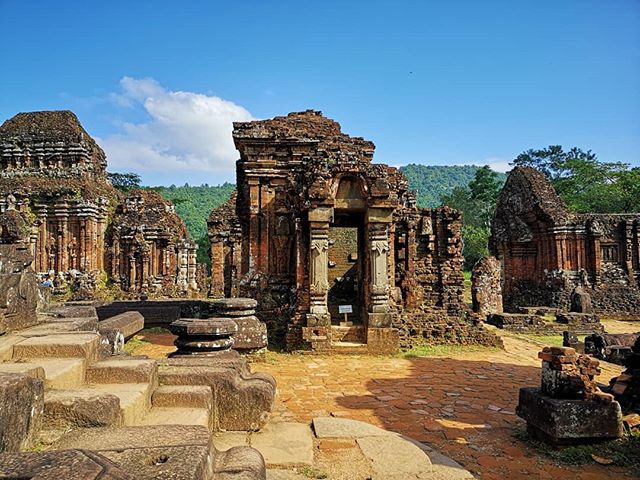
These ruins were built to worship the religion of the ancient Champa Kingdom. Centered on brick Cham towers, you can see structures that carry the history of the 6th to 13th centuries.
No adhesive-like material of any kind was used in the construction — the towers are built purely from stacked bricks. Beautiful carvings decorate the exterior, and even today it’s not entirely clear exactly how they were made.
With undeciphered inscriptions and areas that remain unexplored, the full picture of the ruins still isn’t known — which makes it pretty mysterious and thrilling!
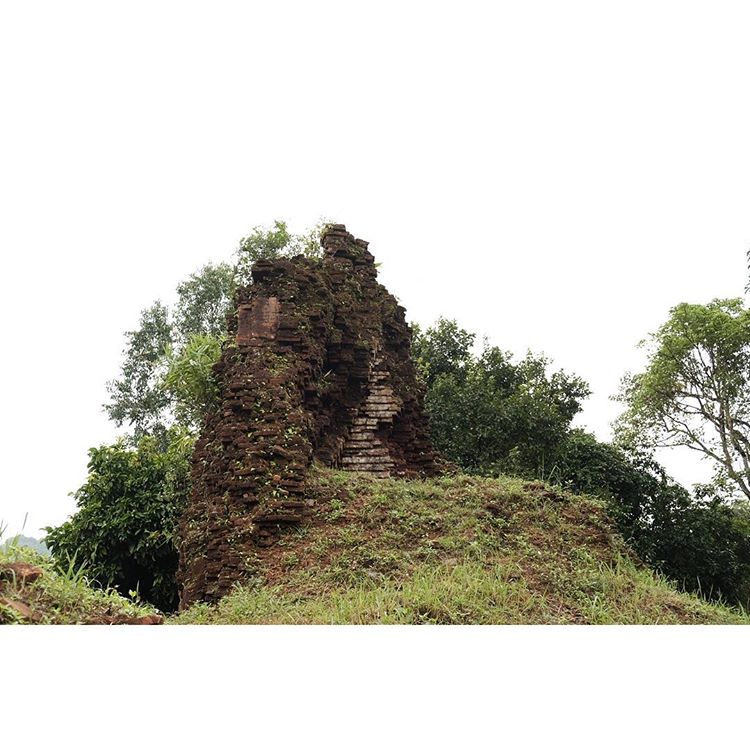
It suffered considerable damage from bombing during the Vietnam War in more recent history, but that’s worth taking in too, as part of its history up through the modern era. It takes just under 1 hour 30 minutes by car/taxi from the airport or city center, but from a beachfront hotel closer to Hoi An (further south), it can sometimes take under an hour.
If you’re hesitant about driving yourself in a rental car, tours are also available — give it a try, it’s an easy trip!
World Heritage Site: “Complex of Huế Monuments (Nguyen Dynasty Imperial City)”
Admission:
Combined ticket for the Imperial City, Khai Dinh Tomb, and Minh Mang Tomb → Adults 280,000 VND (about 1,300 yen) / Children 55,000 VND (about 250 yen)
Suggested visit length: about 2 hours on a tour. If you want to see it properly, plan on half a day or more.
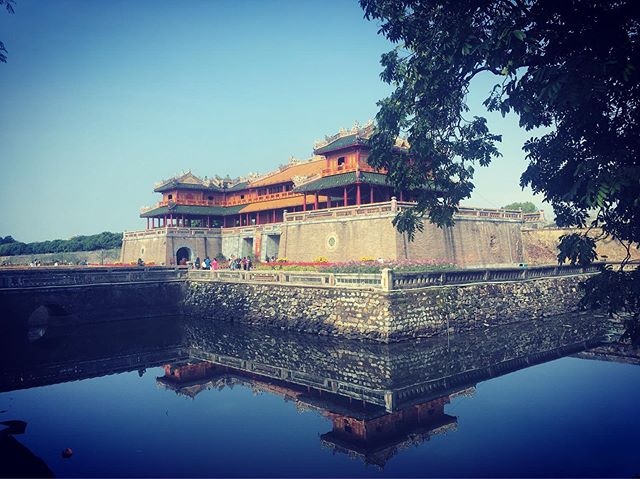
Huế flourished as the imperial capital of the Nguyen Dynasty, Vietnam’s final royal dynasty, from 1802 to 1945.
Today it exists as an ordinary Vietnamese town, but the imperial palace, royal tombs, Buddhist temples, and ruins from the Nguyen Dynasty era remain in large numbers, and it’s these that earned its listing as a World Heritage Site. Huế’s listing was actually Vietnam’s very first World Heritage registration.
The buildings, which blend Chinese culture with Western French influence, are stunning and well worth seeing.
The 12th emperor rests in a mausoleum beneath the ruins. It’s surrounded by golden decoration, letting you glimpse the prosperity of that era’s civilization.
At a nearby restaurant, you can enjoy an extravagant royal-court-style meal while listening to royal-court-style music (the music costs around 10,000 yen or so). If you want to feel like a king or princess for a moment, this is your chance (lol).
We’d recommend joining a tour for this one too.
3. Plenty to Enjoy Beyond the World Heritage Sites Too
The 3 World Heritage Sites tend to steal the spotlight, but of course there are plenty of other sightseeing spots too.
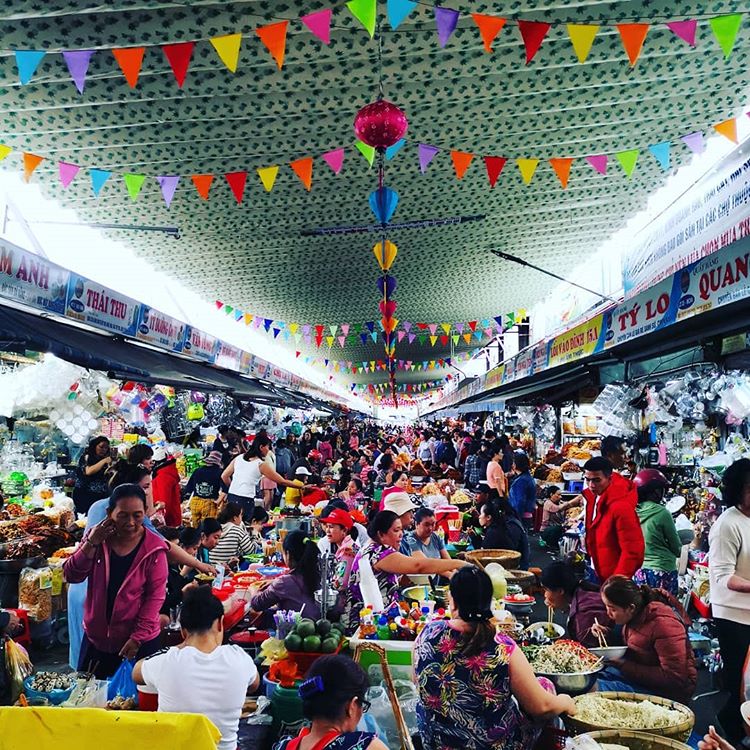
Within Da Nang city, you can enjoy Han Market and Con Market, known as the city’s two big markets. Neither is aimed at tourists — both are markets that locals use in their everyday lives. Visiting markets like these is an incredible way to learn about the local lifestyle, food culture, and traditions. Safety isn’t an issue either, so it’s well worth a visit.
(That said, whenever you travel abroad, it’s always good to take basic safety precautions!)
The city also has charming, nostalgic-feeling buildings like Da Nang Cathedral, which are guaranteed to be Instagram-worthy!
In the center of the city is the Museum of Cham Sculpture, where you can see Buddhist statues and artifacts from the era of the Champa Kingdom. Many of these were excavated from the World Heritage Site “My Son Sanctuary” mentioned earlier. If you can’t make it all the way to My Son Sanctuary, this is well worth a visit instead.
On the other hand, modern bridges like the Dragon Bridge and Song Han Bridge are also lit up dramatically at night, creating a dreamlike sightseeing spot of their own. It also seems to be a popular date spot for local couples. Why not stop by for a stroll after dinner with your partner or spouse?
New attractions keep popping up too. Da Nang is home to Ba Na Hills, a theme park styled after medieval France. Sitting at an elevation of roughly 1,500 meters, it’s reached from the base by a cable car that holds the Guinness World Record for the world’s longest. Enjoy the incredible views along the way!
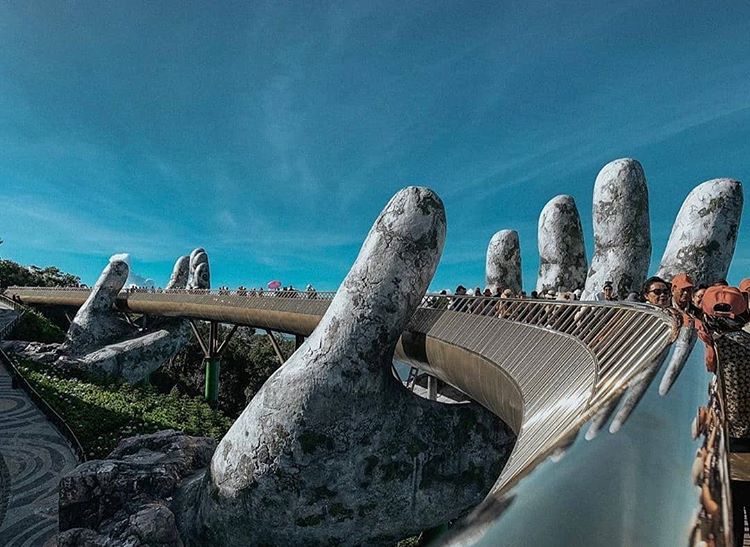
In June 2018, Ba Na Hills unveiled its newest addition, the “Golden Bridge.” This astonishing sight, seemingly held up by giant hands, has become one of Da Nang’s newest attractions.
4. Overwhelmingly Delicious Local Food
If you’re traveling around Southeast Asia, Asian food that suits Japanese tastes is definitely one of the highlights!
Da Nang is no exception. And when it comes to Vietnam, of course, there’s pho!!
That goes without saying, but there’s plenty of other delicious food too, so let me introduce a few dishes briefly.
Cao lau is a noodle dish made from rice flour, similar to udon (or a thicker dipping noodle). It’s piled high with char siu-style pork, Southeast Asian-style vegetables, and crispy fried wontons. Tossed with a slightly sweet soy-based sauce, it’s absolutely delicious. It’s also a specialty dish of Hoi An.
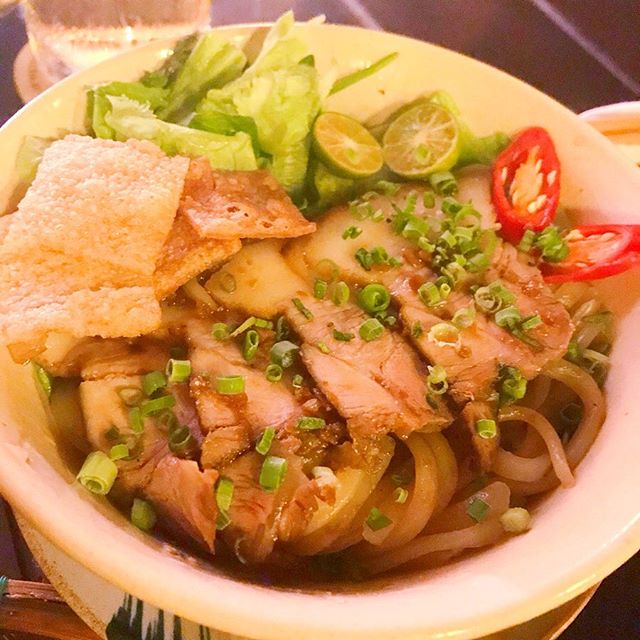
There’s plenty of other local food in Da Nang worth trying too.
I’d love to cover some of it in its own dedicated article someday.
Wrap-Up
So, what did you think?
Da Nang is a destination you can enjoy in all kinds of ways — beach resorts, World Heritage sightseeing, city exploration, great food, and even surfing.
Development of beach resorts and theme parks is said to be continuing, so it looks like there will be plenty more new attractions to come.
If you’re considering a tropical destination like Hawaii or Guam, why not consider Da Nang, Vietnam, as well?
Thank you for reading all the way to the end.
コメント