

Hello! (@chiropiyo0331) here.
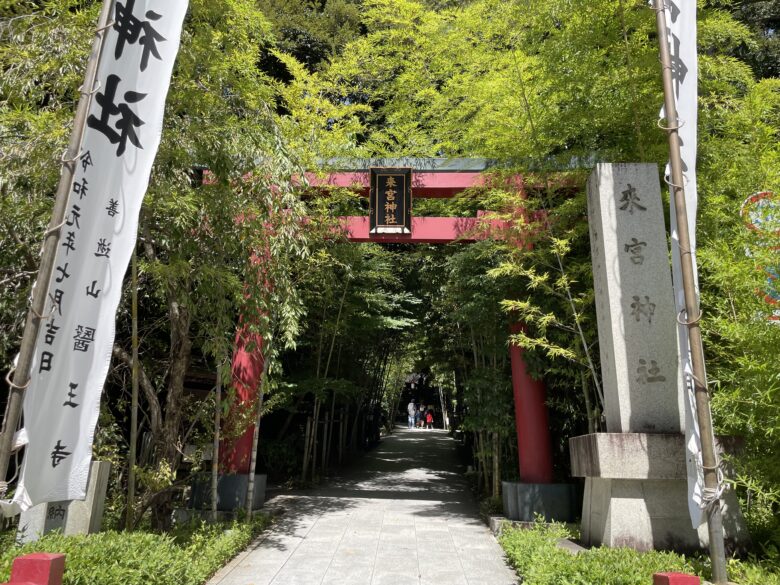
This time I’m introducing a shrine in Atami that has long been worshipped as a “god of good fortune and luck,” Kinomiya Shrine.
In this article, I’ll introduce how to get to Kinomiya Shrine, its highlights, and how long a visit takes.
“I wonder what Kinomiya Shrine is like”
“I want to know how long it takes to visit Kinomiya Shrine”
If that’s you, this article is just right, so please read to the end.
• I actually visited Kinomiya Shrine
• I visited each spot at Kinomiya Shrine and checked the highlights and the actual time needed
- Overview of Kinomiya Shrine
- Time Needed to Visit Kinomiya Shrine
- Recommended Worship & Sightseeing Route at Kinomiya Shrine
- Kinomiya Shrine Highlight ①: Second Great Camphor
- Kinomiya Shrine Highlight ②: Inari Shrine & Temizuya
- Kinomiya Shrine Highlight ③: Main Hall
- Kinomiya Shrine Highlight ④: Great Tree
- Kinomiya Shrine Highlight ⑤: Sanshuden
- Hotels Near Kinomiya Shrine
- Is Kinomiya Shrine Worth Visiting?
Overview of Kinomiya Shrine
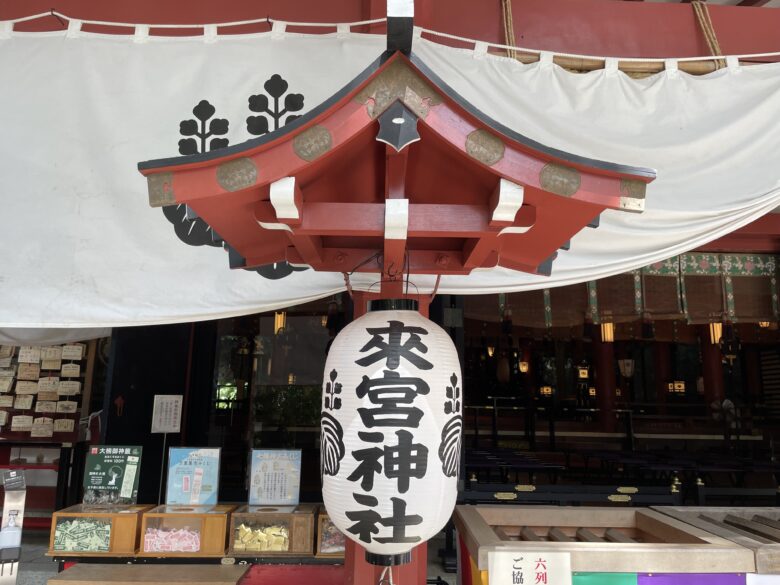
Kinomiya Shrine is a shrine in Atami, Shizuoka. Long known as Kinomiya Daimyojin, it is the guardian deity of the Atami district, enshrined in the Kinomiya area, and has been revered since ancient times as a god of good fortune and luck.
It’s famous for its great camphor tree over 2,100 years old, designated a national natural monument, and its presence is overwhelming. The main deities enshrined at Kinomiya Shrine are Yamato Takeru no Mikoto, Isotakeru no Mikoto, and Onamuchi no Mikoto, and many worshippers visit.
| Name | Kinomiya Shrine |
| Address | 43-1 Nishiyamacho, Atami, Shizuoka 413-0034 |
| Hours | 9 a.m.–5 p.m. * Prayer ceremony reception until 16:30 |
| Access | [By car] From Tokyo: on Route 135, exit the Nishikigaura Tunnel and turn left immediately From Ito: on Route 135, turn right just before the Nishikigaura Tunnel [By taxi] About 10 minutes from Atami Station [By train] 5-minute walk from Kinomiya Station on the JR Ito Line (next stop after Atami Station) About 18 minutes on foot from JR Atami Station |
| Parking | Partner parking lots nearby ¥300 for 90 minutes |
| Map | <iframe src="https://www.google.com/maps/embed?pb=!1m14!1m8!1m3!1d13057.011388474657!2d139.0678814!3d35.1003967!3m2!1i1024!2i768!4f13.1!3m3!1m2!1s0x6019be6e1f861df3%3A0x3a9048f244a7319b!2z5L6G5a6u56We56S-!5e0!3m2!1sja!2sjp!4v1699078095814!5m2!1sja!2sjp" width="600" height="450" style="border:0;" allowfullscreen="" loading="lazy" referrerpolicy="no-referrer-when-downgrade"></iframe> |
| External Link | https://kinomiya.or.jp/ |
Find hotels near Kinomiya Shrine »
Rakuten Travel Jalan



Time Needed to Visit Kinomiya Shrine
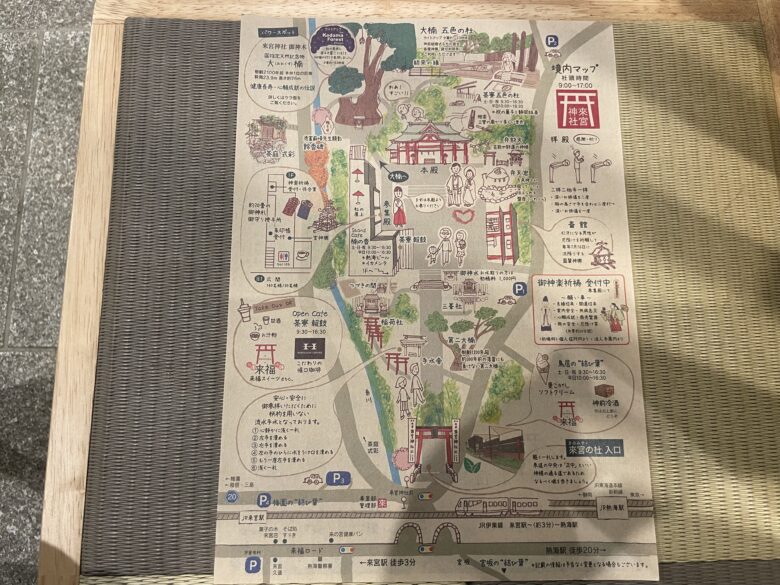
Here’s how long it actually took on my first visit to Kinomiya Shrine.
| Main spots | Points | Time |
| Second Great Camphor | A second giant tree, over 1,300 years old, struck by lightning about 300 years ago | 5 min |
| Inari Shrine & Temizuya (purification fountain) | Torii gates reminiscent of Kyoto’s Fushimi Inari Taisha shrine | 5 min |
| Main Hall | Worship Benten Iwa & Benzaiten (goddess of arts and wealth) | 10 min |
| Great Camphor Tree (Okusu) | Honshu’s oldest tree at over 2,100 years (National Natural Monument) | 15 min |
| Sanshuden | Goshuin stamp reception and amulet office | 10 min |
Simply adding up the time for each spot,the time needed to tour Kinomiya Shrine comes to 45 minutes.
If you only want to pray, 10 minutes should be enough when it isn’t crowded.
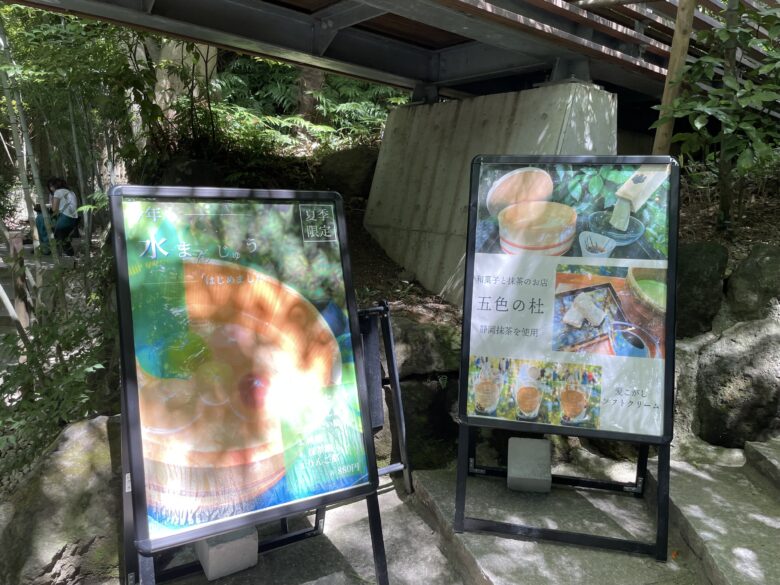
Kinomiya Shrine also has many rest spots on its grounds, including Saryo Goshiki no Mori (celebratory sweets and Shizuoka matcha), Open Cafe Saryo Hokko (Horiguchi Coffee), Stand Cafe Kusu no Ka (Shizuoka specialty ika-menchi), and more.
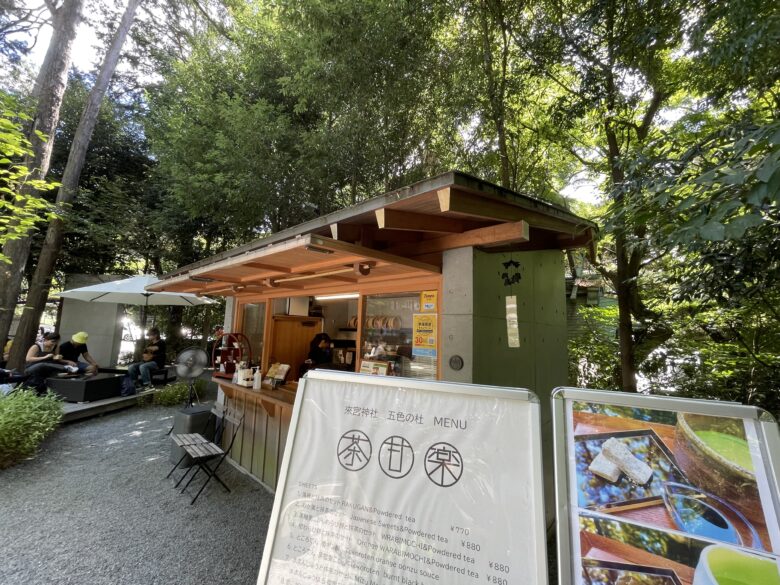
In addition to sightseeing, factoring in breaks you’ll need at least 1 hour, and 1.5 hours to be safe.
Recommended Worship & Sightseeing Route at Kinomiya Shrine
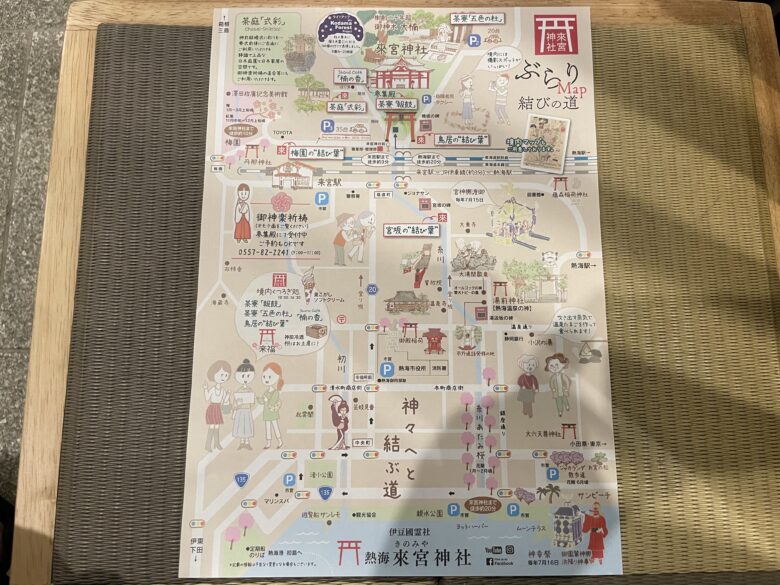
To see it efficiently, enter from the central entrance of the approach, “Seichu,” stop by each spot in order from the front toward the main hall, then see the great camphor tree, and finally head to the Sanshuden on your way back.
• Second Great Camphor
↓
• Inari Shrine & Temizuya
↓
• Main Hall
↓
• Great Camphor Tree
↓
• Sanshuden
This route lets you see everything with no wasted time, so please use it as a guide.
Next, here are the highlights of each spot.
Kinomiya Shrine Highlight ①: Second Great Camphor
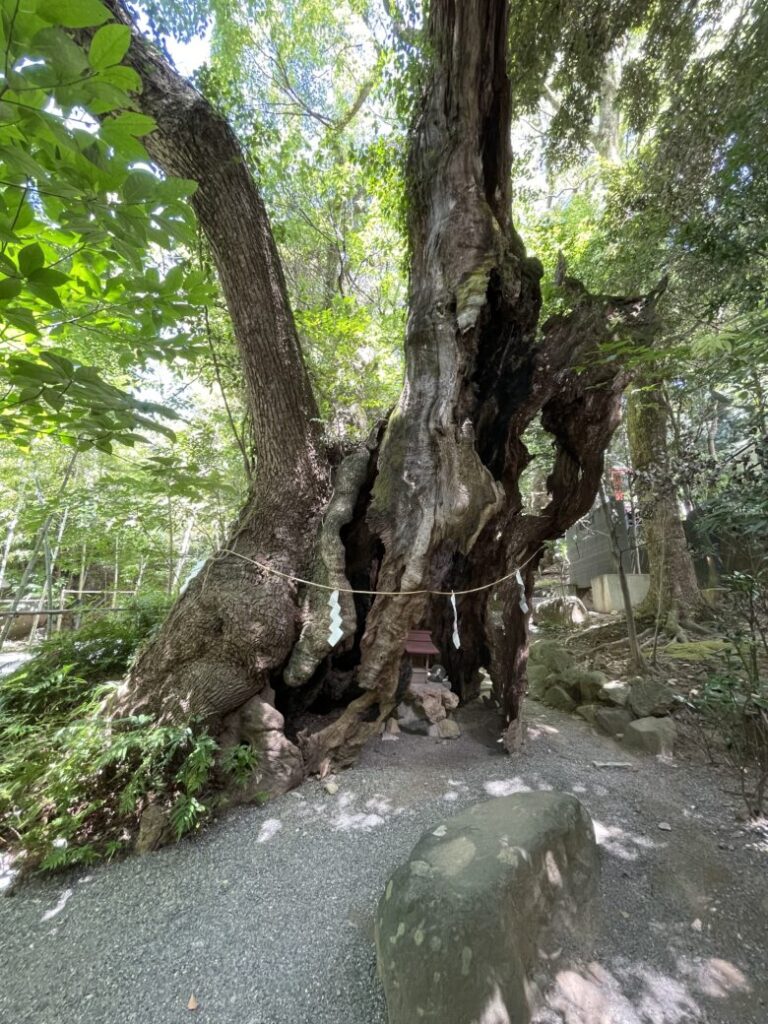
Walk a little along the central approach and the Second Great Camphor comes into view on your right. The first great camphor is behind the main hall.
It was struck by lightning about 300 years ago, so the inside of the Second Great Camphor is hollow, but it’s a huge tree over 1,300 years old with plenty of presence.
Kinomiya Shrine Highlight ②: Inari Shrine & Temizuya
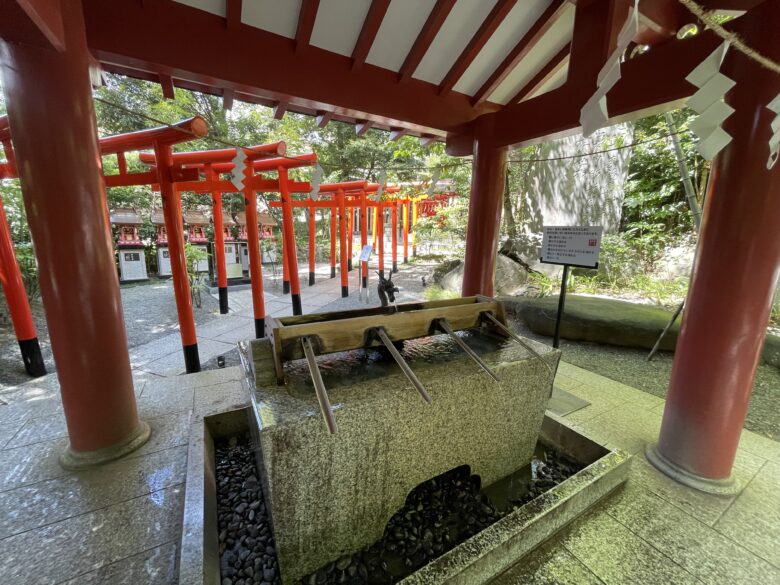
At the temizuya, a sign says not to use the ladle, and there’s a guide to the flowing-water purification.
① Bow lightly and quietly
② Purify your left hand
③ Purify your right hand
④ Pour water into your left palm and rinse your mouth
⑤ Purify your left hand again
⑥ Bow lightly
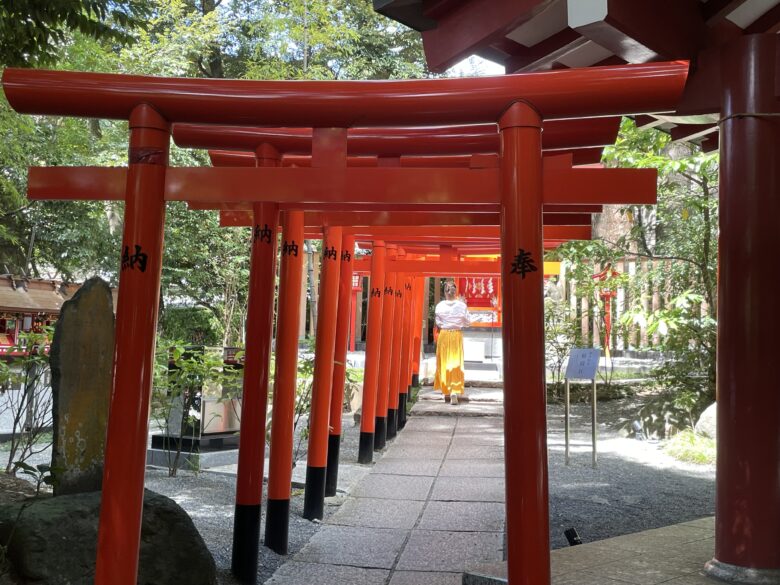
The vivid orange torii gates look great every time.
They remind me of the Thousand Torii Gates at Fushimi Inari Shrine in Kyoto.
Kinomiya Shrine Highlight ③: Main Hall
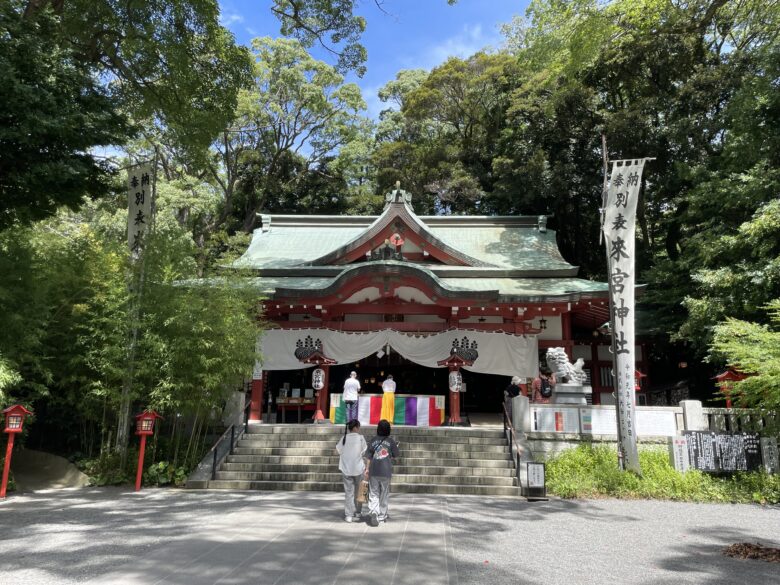
Walk straight along the approach and you’ll reach the main hall, so go and pray.
It’s two bows, two claps, and one bow.
• Bow deeply twice
• Clap twice with your hands together at chest height
• Bow deeply once
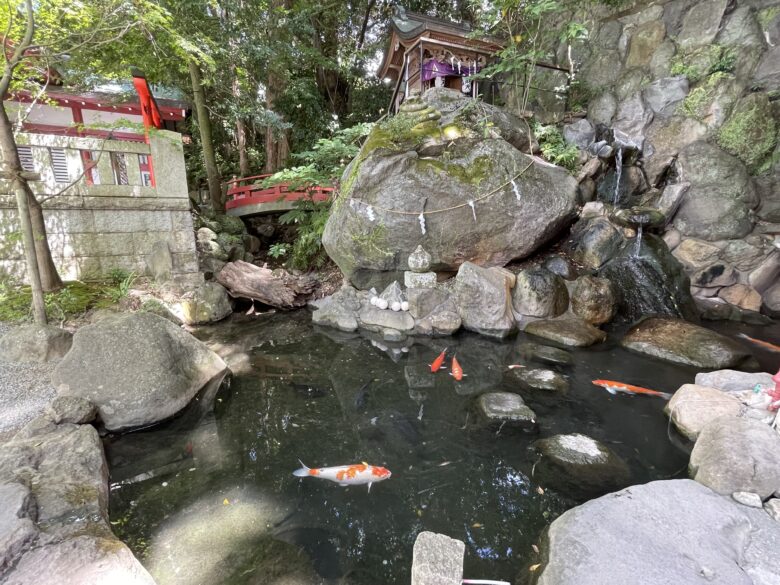
To the right of the main hall is Benten Iwa, an iwakura (sacred rock) said to have been the dwelling of the gods since ancient times.
Carp are swimming in the pond.
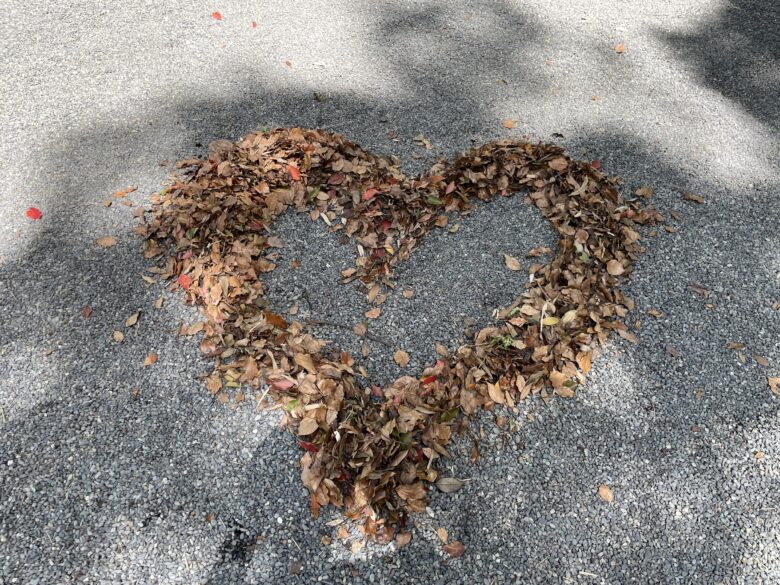
The heart shape made of fallen leaves isn’t art; it’s made as a charm against evil spirits.
Be careful not to kick it when you walk.
Kinomiya Shrine Highlight ④: Great Tree
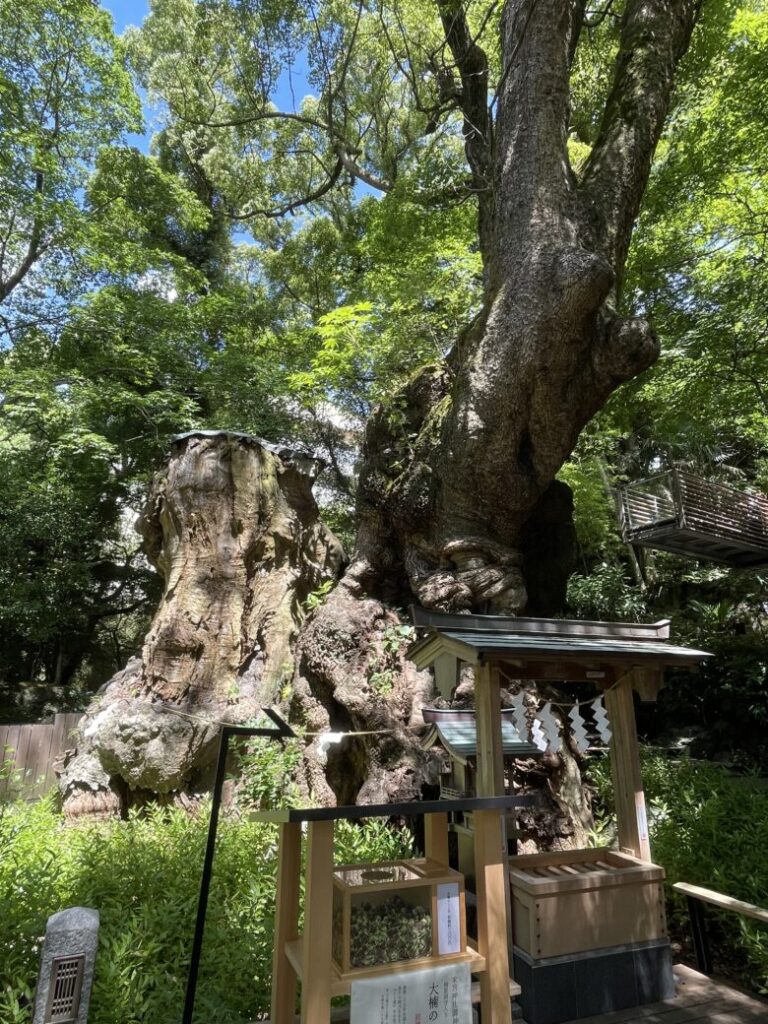
Walk the approach on the left side of the main hall and you’ll soon see the Okusu (great camphor), one of Japan’s three great trees, registered as a National Natural Monument.
Its age is said to be over 2,100 years, with a circumference of 23.9 m and a height of about 26 m, and as the number one giant tree in Honshu it’s one of Japan’s leading power spots.
Incidentally, Japan’s largest tree is a camphor tree in Gamo, Kagoshima, with a circumference of 24.2 m.
Legend says that circling the trunk once extends your life by one year (health and longevity),and circling once while holding a wish in your heart makes the wish come true (wish fulfillment), so walk around it starting from the right.
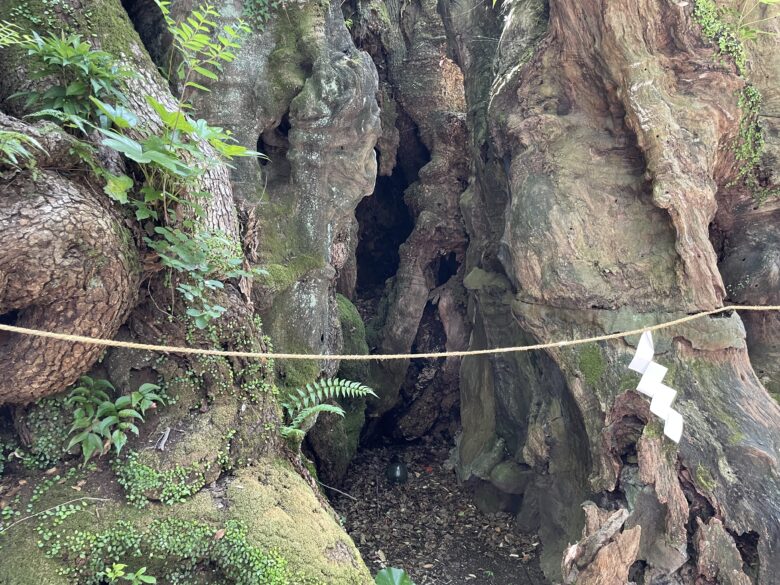
Go around the back of the great camphor and there’s a hollow.
I can really feel the power of life!!
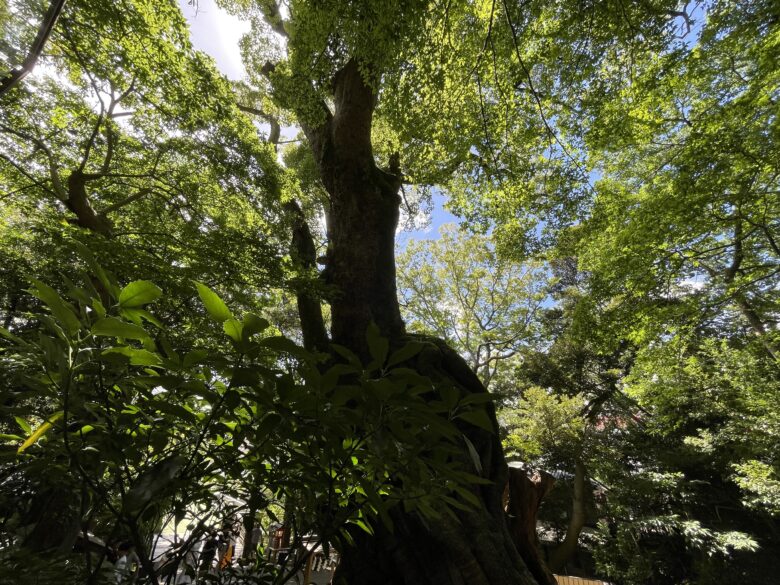
Look up and the contrast between the blue sky and the green of the great tree is beautifully striking!
It feels as if I’m photosynthesizing along with the plant.
Every year on May 5, when the tree’s leaves turn fresh green, the Okusu Festival is held.
Kinomiya Shrine Highlight ⑤: Sanshuden
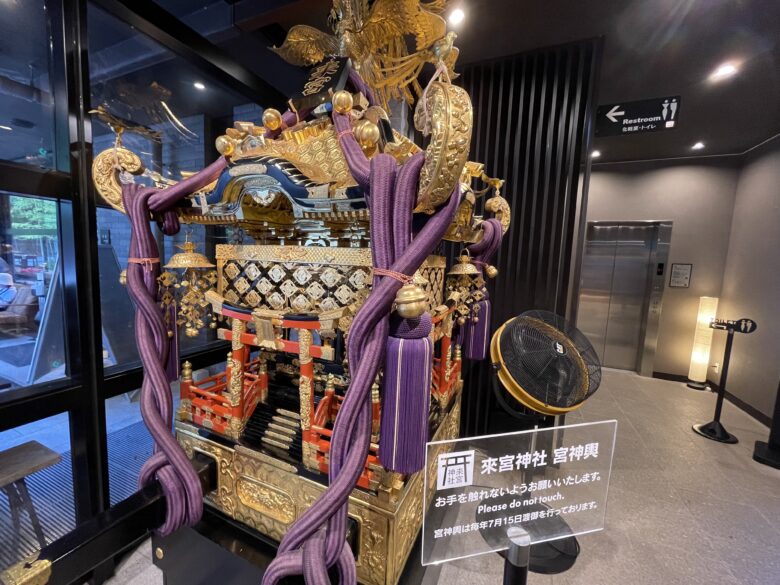
To the left of the main hall is the Sanshuden, which has a goshuin stamp book reception, an approx. 10-tatami amulet and charm office, a kagura prayer reception and waiting room, and “stand cafe Kusu no Ka”.
Every year on July 15, the Atami Kinomiya Shrine Grand Festival “Kogashi Matsuri” is held, and the portable shrine used at that time is on display.

“stand cafe Kusu no Ka” also serves Atami beer and Atami’s local dish “ika-menchi,” so stop by when you think “I’m a little tired!”
The ika-menchi, minced squid and more formed into patties and fried, is delicious!
Hotels Near Kinomiya Shrine
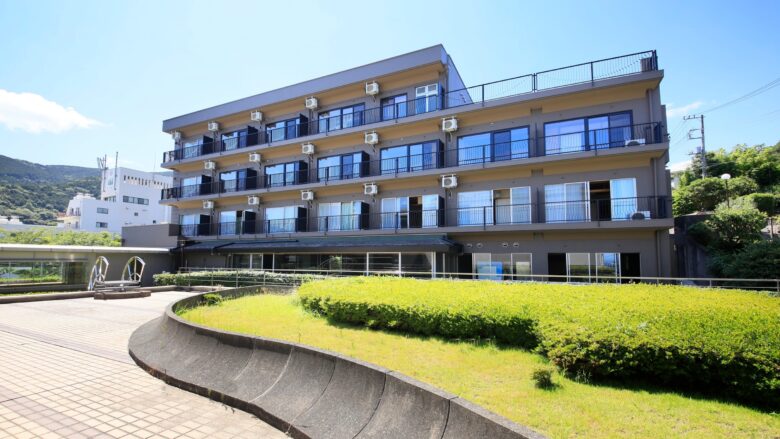
The nearest station to Kinomiya Shrine is Kinomiya Station, so I recommend staying at a hotel near Kinomiya Station.
Many hotels offer a shuttle bus from Atami Station, but some also offer one from Kinomiya Station.
Among them, the recommended hotel is “Natural Izu French Atami Fuga”, with spacious, quiet rooms and a well-regarded French dinner.
By negotiating with the hotel, you can ask to be dropped off at Kinomiya Shrine after checkout, which also shortens travel time!

» Search hotels and ryokan near Kinomiya Shrine on Rakuten Travel
» Search hotels and ryokan near Kinomiya Shrine on Jalan
Is Kinomiya Shrine Worth Visiting?
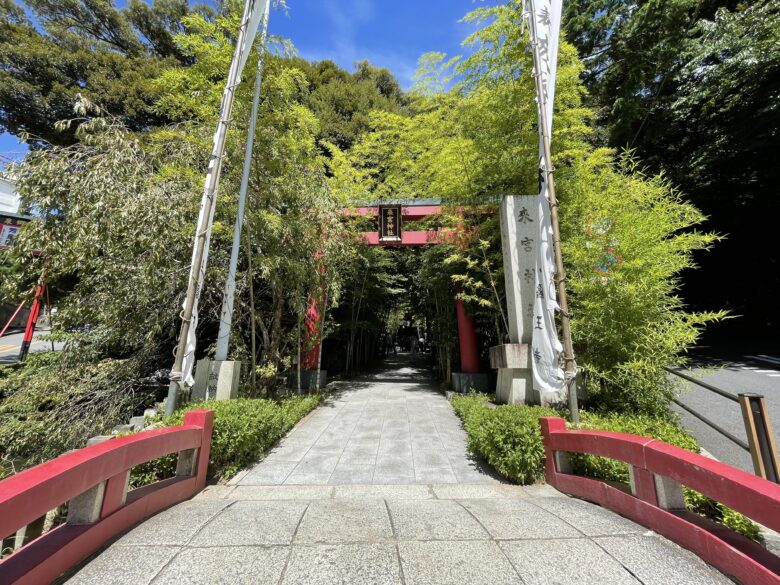
Whether Kinomiya Shrine, known as the guardian deity of the Atami district, is worth visiting depends on your interests.
If you’re interested in power spots or history, you should definitely visit Kinomiya Shrine, which tells a story of prayer and gratitude.
Even if you aren’t interested in power spots, the great camphor tree over 2,100 years old has an overwhelming presence and is an Instagram-worthy spot, and there are also stylish Japanese cafe sweets, so it’s recommended for young couples and girls’ trips and worth a look!
So, let’s trip and be happy!

コメント