
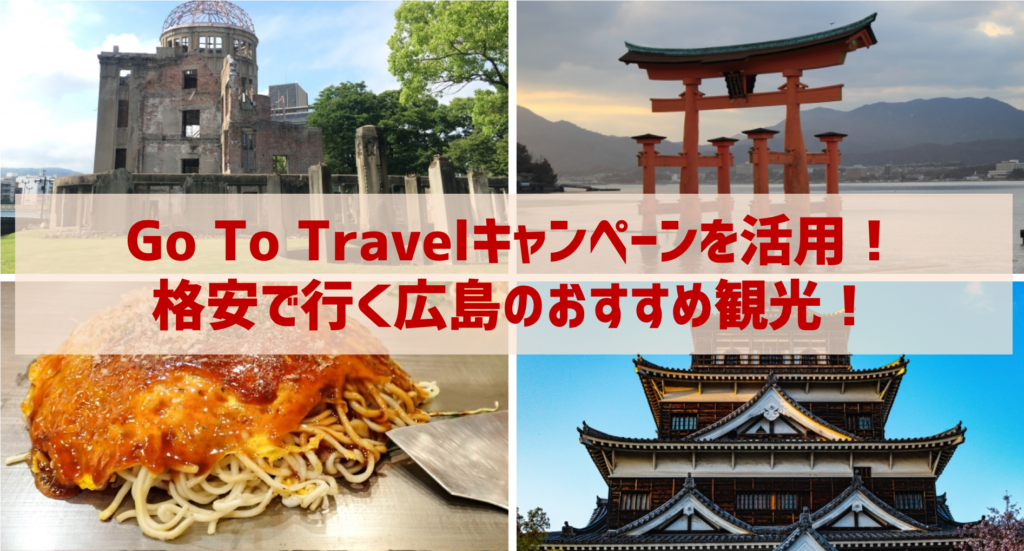
This article covers why Hiroshima is such a rewarding trip, along with the sightseeing spots I’d most recommend after visiting myself.
Why Visit Hiroshima
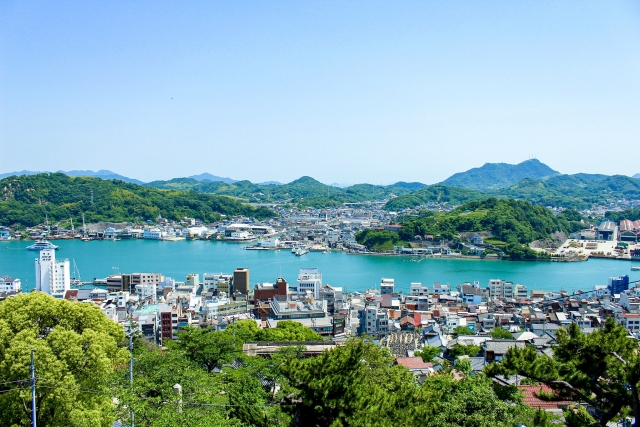
Hiroshima has three big things going for it.
- Two UNESCO World Heritage Sites
- Mountains, sea, and nature all within easy reach
- Okonomiyaki, Hiroshima’s signature food
Two UNESCO World Heritage Sites
Among Japan’s prefectures, Nara has the most World Heritage Sites with three, and Hiroshima comes in second with two: the Atomic Bomb Dome and Itsukushima Shrine, both inscribed in 1996.
Plenty of travelers make a hobby of visiting World Heritage Sites around the world, and the Atomic Bomb Dome in particular draws attention globally — visitors come from across Asia as well as Australia, Canada, the US, and beyond.
Mountains, Sea, and Nature
Hiroshima has it all — the calm waters of the Seto Inland Sea, and mountains like Mikurajima, Dogo, and Mt. Misen. Miyajima, floating in the Seto Inland Sea, is one of Japan’s “Three Great Views,” and even locals say it never gets old and is beautiful every time they visit.
Okonomiyaki, Hiroshima’s Signature Food
When it comes to Hiroshima food, okonomiyaki is the one thing you can’t skip.
Hiroshima-style okonomiyaki is built on a thin crepe-like batter layered with a mountain of shredded cabbage, tenkasu (tempura scraps), green onion, bean sprouts, and pork belly, then topped with yakisoba noodles and an egg. Add Hiroshima oysters on top and it’s absolutely incredible.
Anago (conger eel) rice is another local favorite — anago is in season in January and August, so it’s worth timing a visit around that. Visit in winter and you get both oysters and anago at their best.
Recommended Sightseeing Spots in Hiroshima
Here are the spots I’d genuinely want to visit again after my own trip to Hiroshima.
The Atomic Bomb Dome
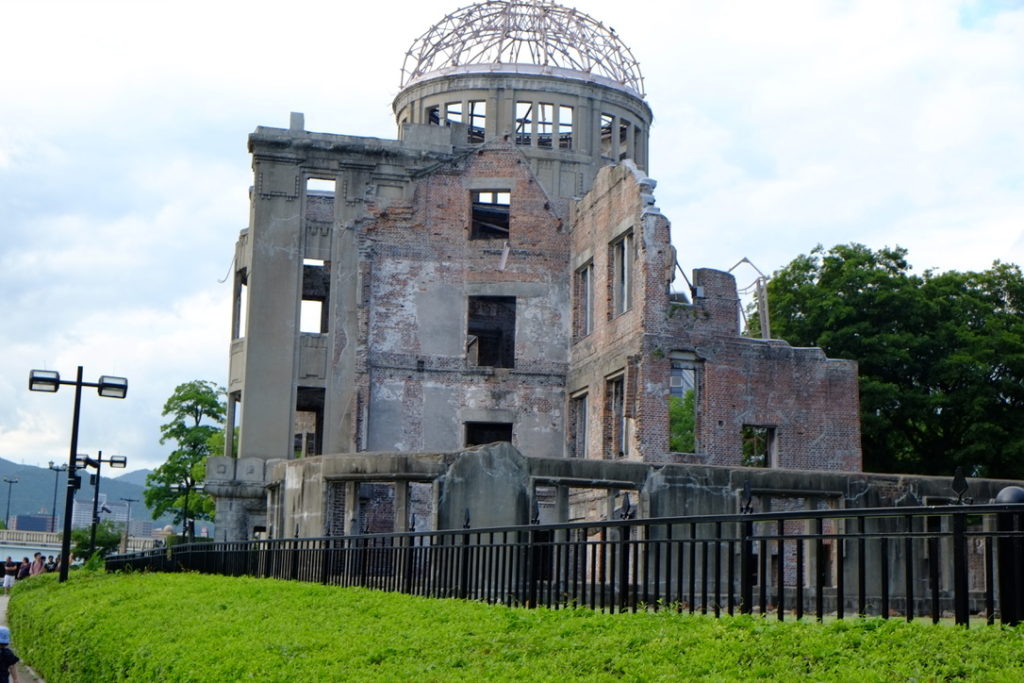
The Atomic Bomb Dome sits in Peace Memorial Park in central Hiroshima and is registered as a UNESCO World Heritage Site. On August 6, 1945, the atomic bombing destroyed what had been a modern Taisho-era building. Only the dome-shaped steel frame remained standing, and by the 1950s people had started calling it the “Atomic Bomb Dome.”
Do you know what the building actually was before the bombing?
It was originally a Western-style building designed by Czech architect Jan Letzel to exhibit local products. In fact, this is where Japan’s very first baumkuchen was made and sold. Because the blast came from almost directly overhead, the very center of the building avoided total collapse — though everyone working inside at the time was killed instantly.
The Hiroshima Peace Memorial Museum is nearby, and visiting it, knowing how many lives were lost at this very ground zero, was genuinely heartbreaking. I remember Western visitors at the museum stopping in front of the photos of the devastation and just staring, unable to look away, for what felt like a very long time.
| Address | 〒730-0051 Otemachi, Naka-ku, Hiroshima |
| Access | 20 min by streetcar from Hiroshima Station South Exit (bound for Miyajimaguchi, Nishi-Hiroshima, or Eba); within walking distance of the Atomic Bomb Dome stop |
| Phone | 082-245-2111 |
| Hours | Open 24 hours (viewable from outside) |
| Closed | Never |
| Admission | Free |
Itsukushima Shrine
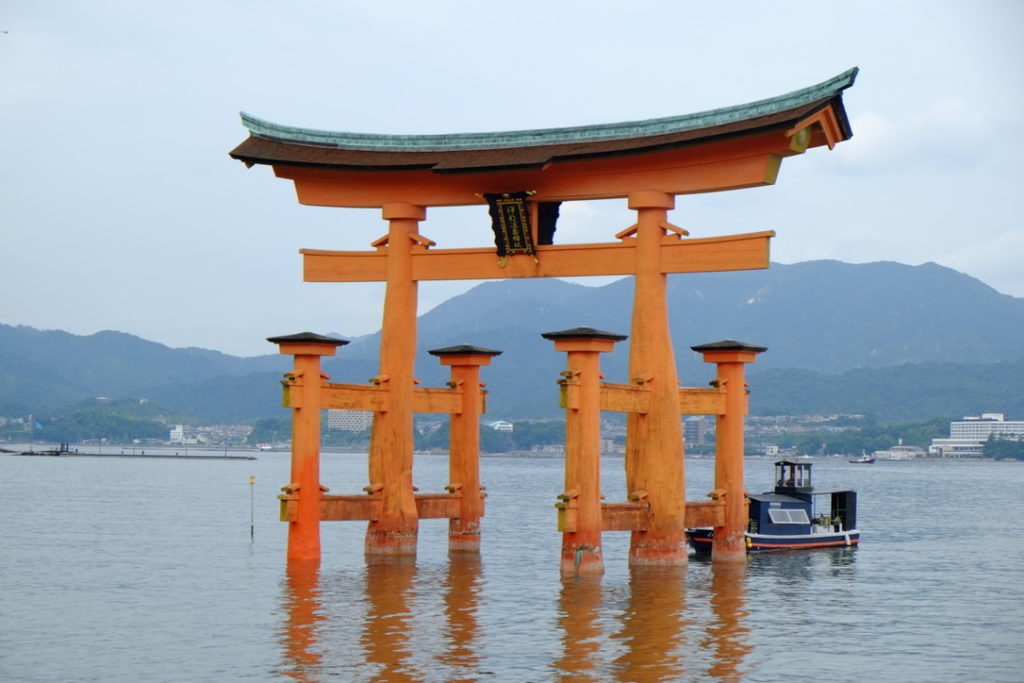
Itsukushima Shrine is famous for its roughly 16m-tall torii gate. At low tide you can normally walk right up to it, though a large-scale restoration project that began in June 2019 may still limit access.
Inside the grounds, you’ll walk along a roughly 300m covered corridor — note that it’s one-way only. The main hall enshrines Ichikishima-hime, Tagiri-hime, and Tagitsu-hime, deities of the sea, transportation, wealth, and the arts.
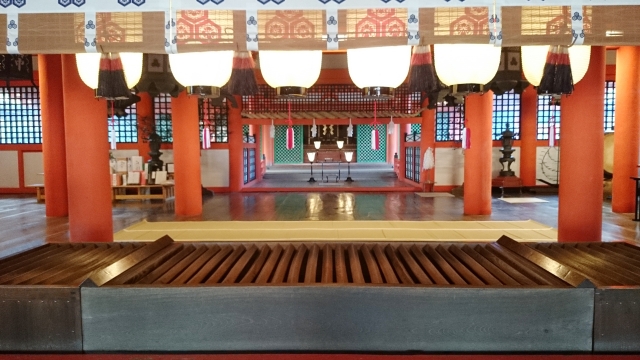
After paying your respects in front of the worship hall, turn around and you’ll see the great torii and the elevated stage lined up in a single sightline — very photogenic, so don’t forget to snap a picture!
I didn’t get to see it myself, but Itsukushima Shrine at night is something I’d especially recommend for couples. About 30 minutes after sunset, the shrine buildings are lit up, creating an almost otherworldly scene. It’s bound to take your breath away!
| Address | 〒739-0588 1-1 Miyajima-cho, Hatsukaichi, Hiroshima |
| Phone | 0829-44-2020 |
| Hours | 6:30 AM – 6:30 PM (varies by season) |
| Closed | Never |
| Admission | ¥300 for adults (shrine), ¥300 (treasure hall), ¥500 combined ticket |
Miyajima
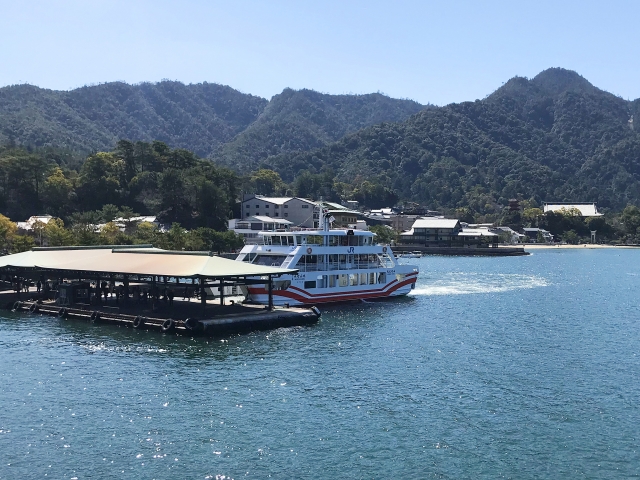
Itsukushima Shrine sits on the island of Miyajima, and the surrounding area is part of the World Heritage listing. More than 4 million people visit the island every year.
The classic plan is hiking Mt. Misen and paying your respects at Itsukushima Shrine, rising right out of the sea. Here’s the actual route I took when I visited — since it’s a World Heritage Site, I’d set aside at least half a day to explore it properly.
| Address | Miyajima-cho, Hatsukaichi, Hiroshima |
| Access | About 50 min by JR and ferry from Hiroshima Station |
| Phone | 0829-30-9141 (Miyajima Tourist Association) |
| Hours | No fixed hours (last ferry off the island is 10:00 PM for day visitors) |
| Closed | Never |
| Admission | Free (island entry) |
A Full Day on Miyajima
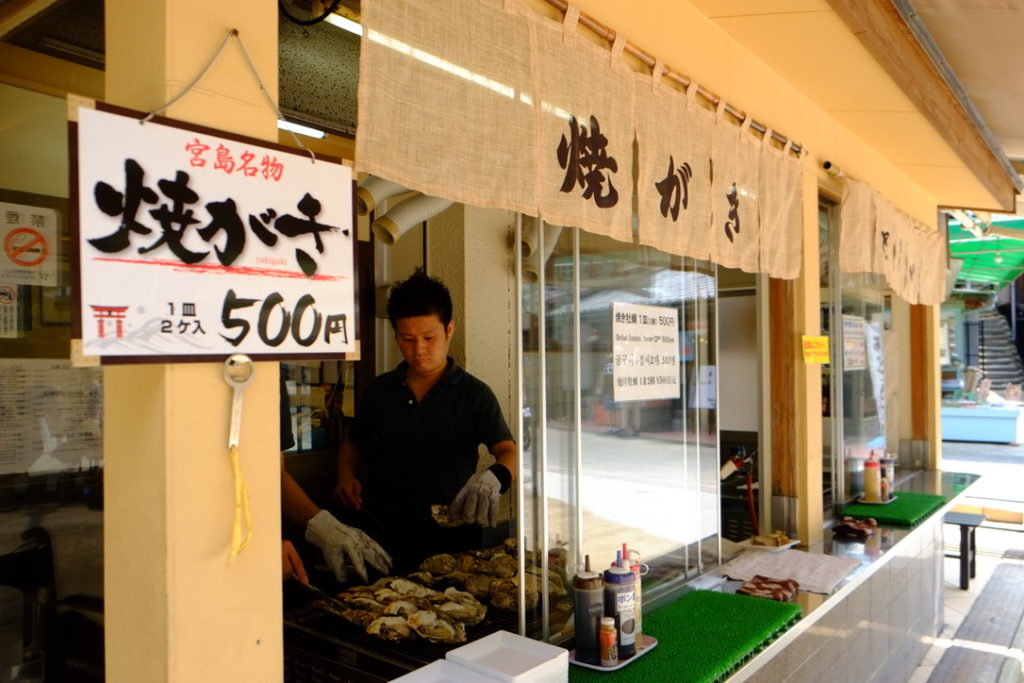
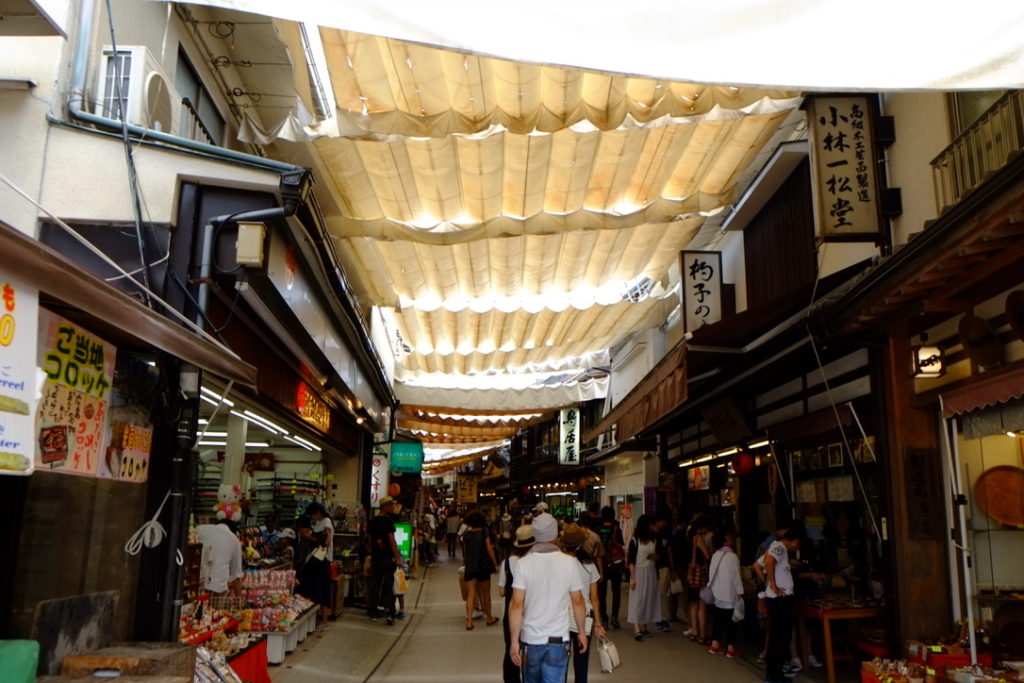
- Step 1: Start with lunch on Miyajima. Walk 5 minutes from JR Miyajimaguchi Station to the Miyajima Matsudai Kisen ferry terminal, then take the 10-minute ferry over — try to arrive in the morning if you can. Once you’re off the boat, fuel up first with Hiroshima’s famous oysters, grilled or raw — both are delicious.
- Step 2: Visit Itsukushima Shrine. After a 15-minute walk past the island’s deer, you’ll reach Itsukushima Shrine, with the main hall visible in the center of the grounds. Pay your respects from in front of the worship hall.
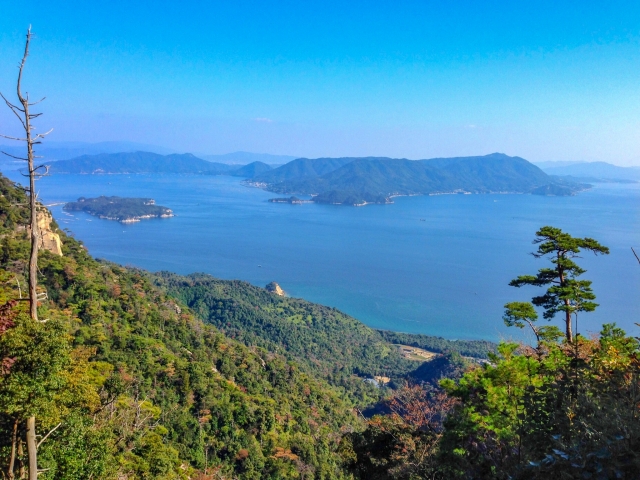
- Step 3: Take in the view from the summit of Mt. Misen. Miyajima is home to the 535m Mt. Misen. Take the ropeway from Momijidani Station to Kayadani Station, transfer once, and continue to Shishiiwa Station to reach the summit. The whole trip takes about 20 minutes and ends at a stunning viewpoint over the Seto Inland Sea!
- Step 4: Snack your way down Omotesando shopping street. By the time you’re back down via the ropeway, you’ll probably be hungry again — so make the most of Miyajima’s food scene on the shopping street. Crispy fried momiji (maple-leaf-shaped) cakes, Miyajima coppe bread, and local craft beer are all on offer. Just note some shops close as early as 5 PM.
Hiroshima Castle
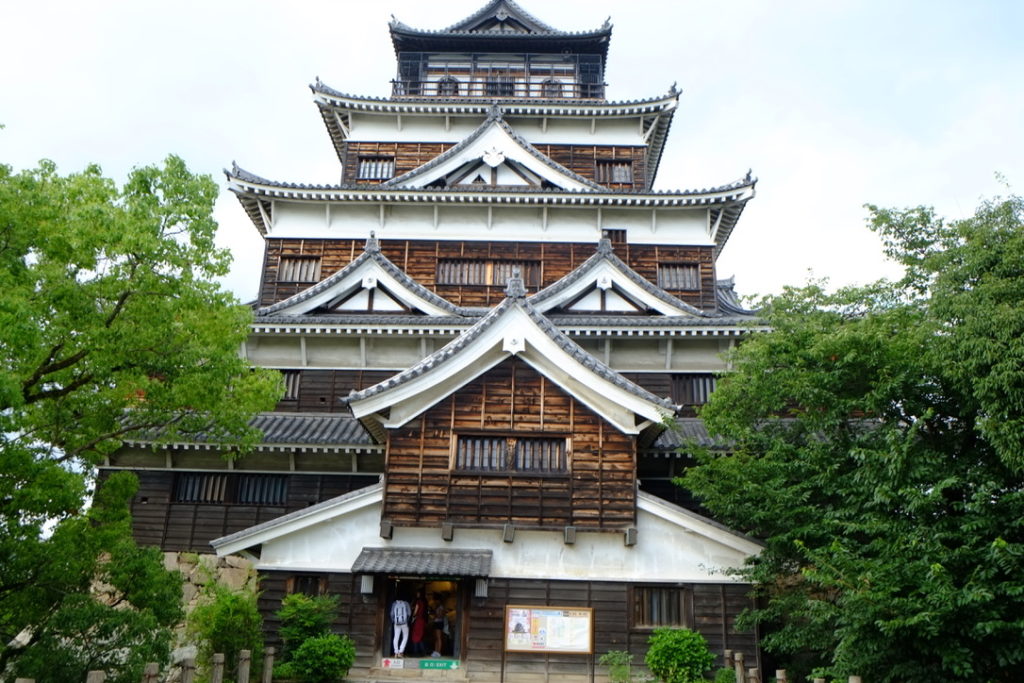
Also known as Carp Castle, Hiroshima Castle was built by Mōri Terumoto in 1589. The main keep was unfortunately destroyed in the atomic bombing, but the exterior has since been rebuilt, and today it houses a museum displaying swords and other artifacts.
As with Itsukushima Shrine, the castle grounds are lit up at night, creating a similarly magical atmosphere.
Yamato Museum
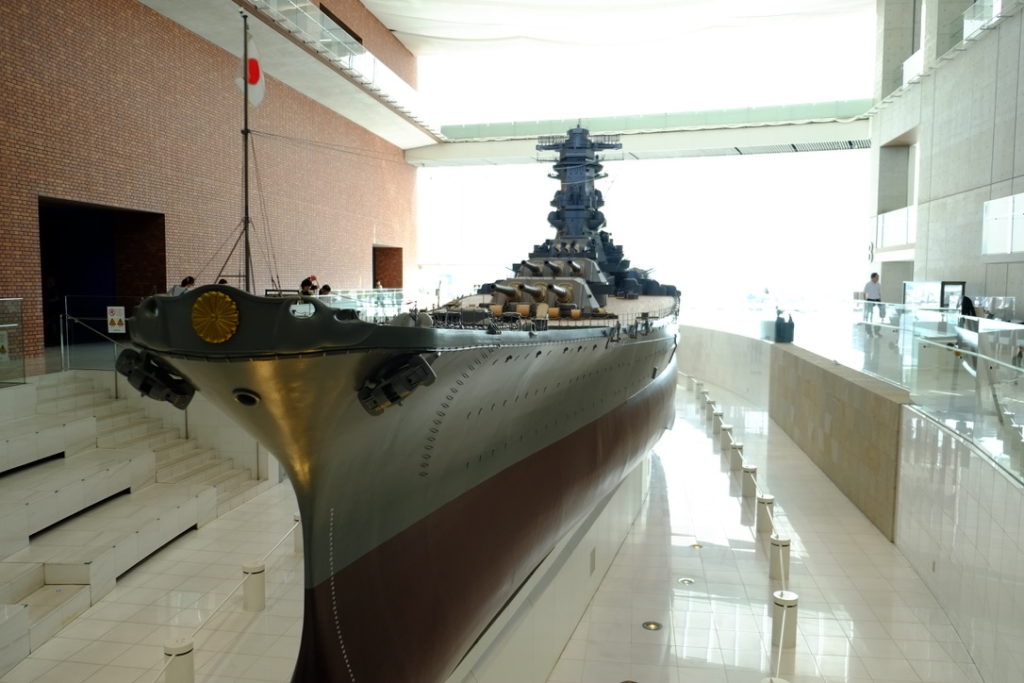
The Yamato Museum is a must-visit in Kure. The massive scale model of the battleship Yamato is the star attraction, but the real Zero fighter plane and human torpedo on display are genuinely jaw-dropping too.
The Yamato was built in Kure and measured an astonishing 260+ meters long. It was sunk by US forces in 1945 and now rests on the seafloor off the coast of Kagoshima.
The Yamato model, the museum’s centerpiece, greets you right as you walk in — it’s built at about 1/10 scale, and seeing it in person, the level of detail is genuinely impressive and well worth the visit.
Summary
So, what did you think?
Hiroshima has two World Heritage Sites, Miyajima (one of Japan’s Three Great Views), and incredible food — okonomiyaki, oysters, anago rice — it’s genuinely packed with things to love.
If you’ve been looking for a reason to plan a trip, I hope this gives you one. Hiroshima is well worth it.

Thanks so much for reading all the way through! Between the Atomic Bomb Dome, Itsukushima Shrine, a full day on Miyajima, and the food alone, Hiroshima earns a spot on any Japan itinerary. I hope this guide helps you plan a great trip!
—
About the author

Joe
I love hotels, hot springs, and saunas across the whole country!!
I’ve made it to 40 prefectures so far.
Around 100 hotel stays and 50+ saunas visited, and the count keeps climbing.
My hobbies are travel, golf, snowboarding, saunas, and the gym.
Getting good information is essential to living a rich life.
I’ll keep sharing useful info for wherever your next trip takes you! For work inquiries (venue PR, advertising, hotel article requests), please reach out through this blog’s contact form.
Happy to work flexibly with your needs.
Certified Sauna & Spa Health Advisor
コメント